







Rehabilitation Robotic Gloves: A Revolutionary Aid for Hand Recovery
In the ever - evolving landscape of medical technology, rehabilitation robotic gloves have emerged as a groundbreaking solution for individuals facing hand - related disabilities. These innovative devices are designed to assist in the recovery process, offering hope and improved functionality to a wide range of patients.
How Do They Work?
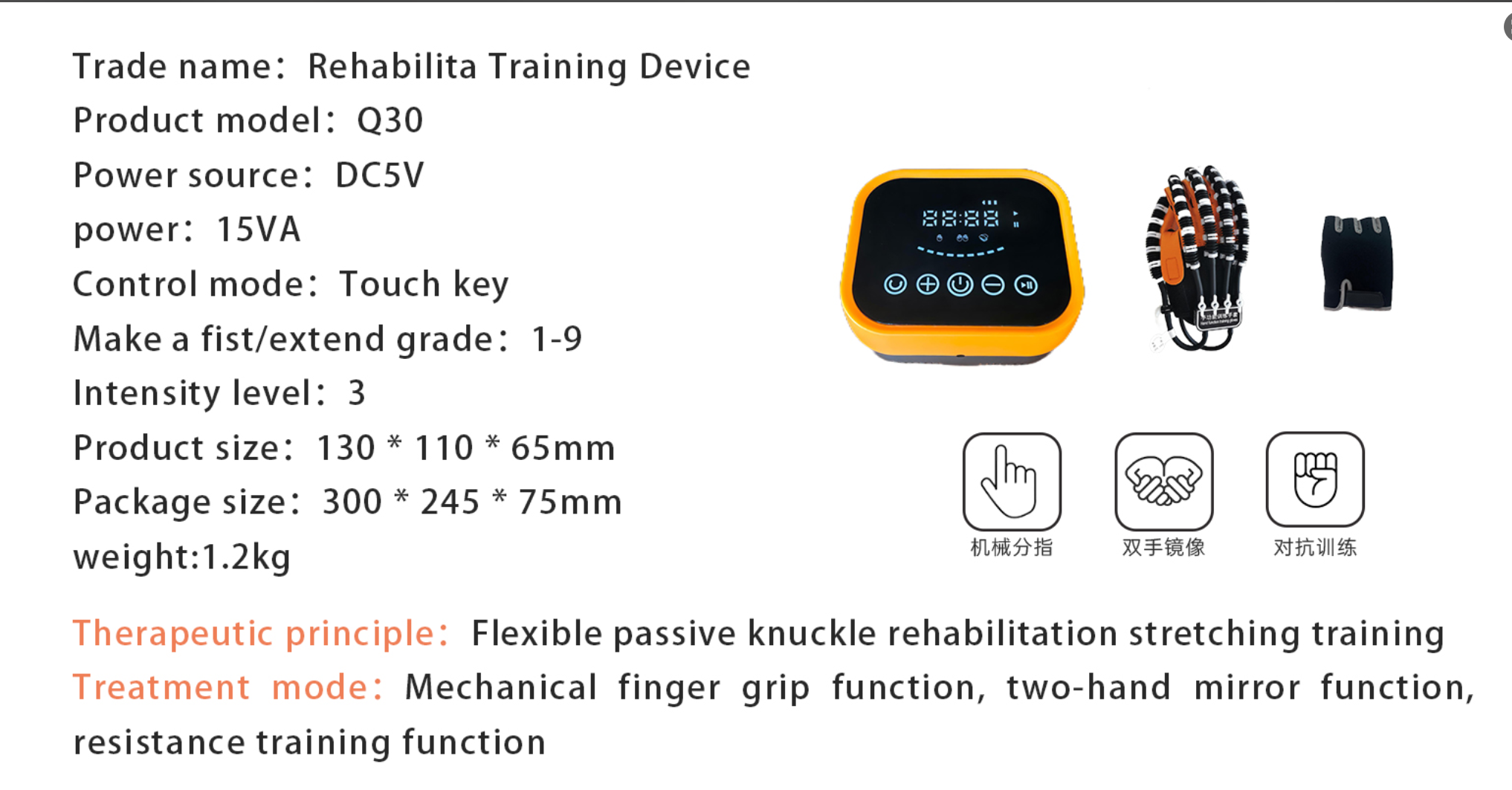
Rehabilitation robotic gloves operate on diverse mechanisms. Some models, like those powered by compressed gas, function by inflating and deflating bellows within the glove. This inflation and deflation cause the expansion and contraction of the glove's components, which in turn guides the fingers to perform Flexion and extension movements. For instance, as the gas fills the bellows, the glove gently pushes the fingers into a flexed position, and when the gas is released, the fingers return to an extended state. Other gloves may use a cable - driven system, mimicking the way human muscles pull on bones to move the fingers. There are also those that employ shape - memory alloys (SMA) springs. These springs, when activated by heat or electrical current, change their shape and contract or expand, enabling the glove to manipulate the fingers' movements.
Who Can Benefit?
The user base for rehabilitation robotic gloves is extensive. Stroke survivors often struggle with hand - function impairment, including muscle weakness, lack of coordination, and limited range of motion. These gloves can be a game - changer for them, helping to stimulate the affected muscles, improve dexterity, and enhance overall hand function. People who have suffered from hand injuries, such as finger joint fractures (non - Crushing property), tendon injuries, or those with re - planted hands or fingers, can also experience significant benefits. The gloves provide the necessary support and controlled movement to aid in the healing process and regain normal hand use. Additionally, patients with neurological conditions like multiple sclerosis, Parkinson's disease, and dementia, where hand function gradually deteriorates, can find relief and improved quality of life through the use of these gloves.
Advantages Galore
One of the most significant advantages of rehabilitation robotic gloves is their ability to offer high - repetition therapy. Repetitive movement is crucial for muscle retraining and nerve regeneration. With the glove's automated or semi - automated functions, patients can perform a large number of hand exercises in a short period, which would be difficult to achieve through traditional manual therapy alone. They also enable at - home rehabilitation. This not only saves patients the time and cost of frequent hospital or clinic visits but also allows them to carry out their therapy in the comfort and privacy of their own homes. Some gloves come with a mirror - training mode. In this mode, a healthy hand wears a mirror glove and performs movements, and the patient's robotic glove on the affected hand mimics those movements. This stimulates the brain's mirror neurons, promoting neural connections and accelerating the recovery of hand function. Moreover, these gloves can be adjusted to different intensity levels, catering to the specific needs of each patient, whether they are in the early stages of recovery or further along in the rehabilitation process.
The Future is Here
Rehabilitation robotic gloves are already making a profound impact on the lives of many. As technology continues to advance, we can expect these gloves to become even more sophisticated. Future models may incorporate enhanced sensors to provide real - time feedback on the patient's progress, allowing for more personalized and effective treatment plans. There could also be further integration with virtual reality technology, creating immersive rehabilitation experiences that make the therapy more engaging and motivating for patients. With their potential to transform hand - rehabilitation, these gloves are indeed a remarkable addition to the medical field, opening up new possibilities for patients to regain their independence and improve their quality of life.