World Autism Awareness Day: How Can TMS Aid in the Rehabilitation of Children with Autism?
Every year on World Autism Awareness Day, we come together to foster understanding and celebrate the unique strengths of individuals on the autism spectrum. For parents and caregivers, finding effective, safe, and innovative therapies to support their child's development is a primary concern. At QIJIA, we are committed to exploring the frontiers of neurotechnology to provide hope and tangible solutions.One of the most promising advancements in this field is Transcranial Magnetic Stimulation (TMS). This non-invasive technology is gaining recognition for its potential to help alleviate some of the core challenges faced by children with Autism Spectrum Disorder (ASD). Let’s delve into how TMS works and how QIJIA is harnessing its power for good.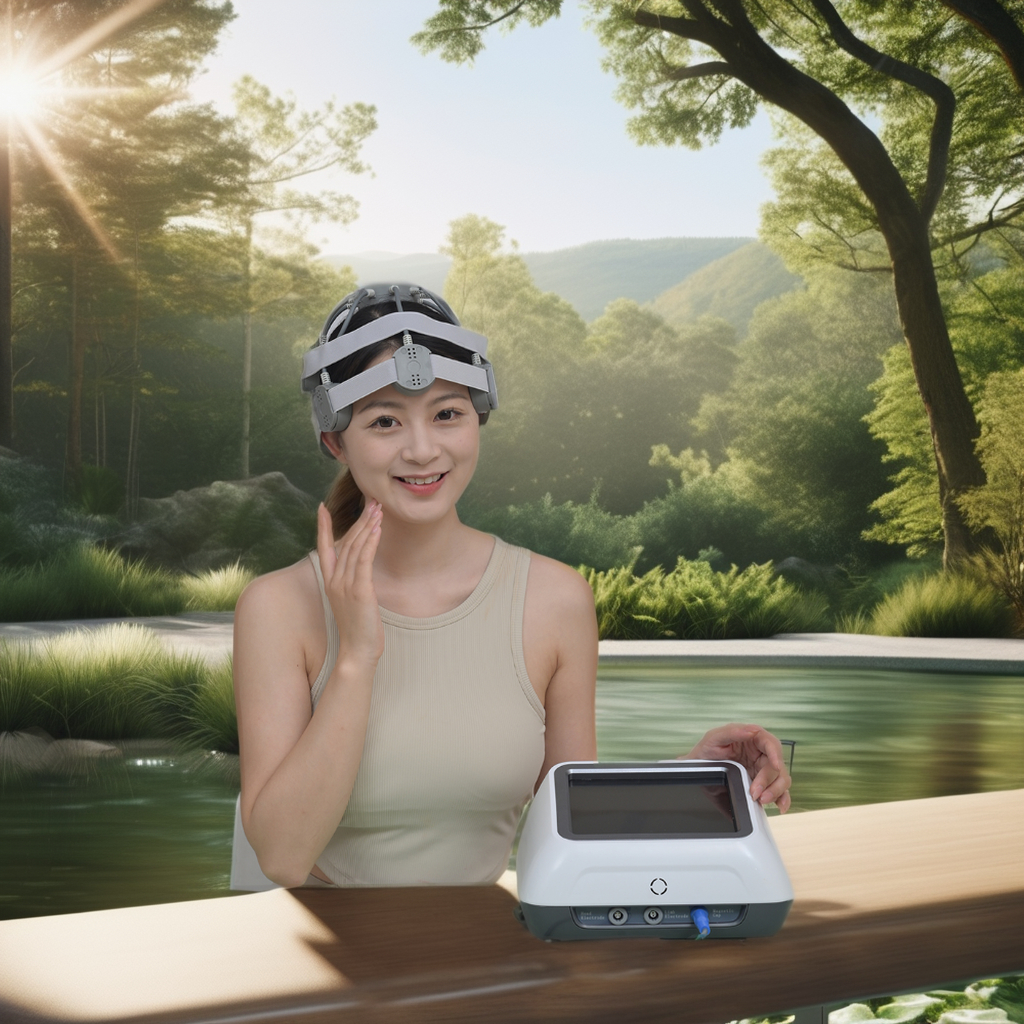
Understanding Autism Spectrum Disorder (ASD)
Autism Spectrum Disorder is a complex neurodevelopmental condition that affects communication, social interaction, behavior, and sensory processing. Every child with autism is unique, with their own set of strengths and challenges. Traditional interventions often include behavioral therapy, speech therapy, and occupational therapy. Now, TMS is emerging as a valuable complementary approach that targets the neurological underpinnings of ASD.What is Transcranial Magnetic Stimulation (TMS)?
Transcranial Magnetic Stimulation is a safe, non-invasive procedure that uses magnetic fields to stimulate nerve cells in specific regions of the brain. Think of it as a gentle, focused magnetic pulse that can modulate neural activity.
Non-invasive and Painless: Unlike surgical procedures, TMS does not require anesthesia or any incisions. The child simply feels a light tapping sensation on the scalp.
Precise Targeting: TMS can be directed at specific brain areas associated with language, social behavior, and emotional regulation—areas that often show atypical activity in individuals with autism.
Drug-Free Approach: TMS offers a neuromodulation alternative without the systemic side effects sometimes associated with medication.
How Can QIJIA's TMS Technology Support Children with Autism?
Research suggests that TMS may help improve core symptoms of autism by promoting better connectivity and balancing activity in brain networks. QIJIA's advanced TMS systems are designed with precision and patient comfort in mind, making them suitable for clinical settings focused on pediatric care.Here’s how TMS therapy may contribute to rehabilitation:
Enhancing Social Communication and Interaction: By stimulating regions like the dorsolateral prefrontal cortex, TMS may help improve eye contact, social reciprocity, and the ability to understand social cues.
Reducing Repetitive Behaviors: TMS can help modulate neural circuits linked to repetitive movements and insistence on sameness, promoting more flexible behaviors.
Improving Emotional Regulation: Many children with ASD struggle with anxiety, irritability, or emotional outbursts. TMS can target areas involved in mood regulation, potentially leading to greater emotional stability.
Supporting Sensory Processing: By calming overactive or stimulating underactive brain regions, TMS may help normalize responses to sensory stimuli, reducing hypersensitivity or hyposensitivity.
The QIJIA Difference: Innovation in Neuromodulation
At QIJIA, our mission is to empower lives through cutting-edge neurotechnology. Our TMS devices incorporate the latest advancements to ensure efficacy, safety, and comfort.
Precision Engineering: Our systems allow clinicians to accurately target specific brain areas for individualized treatment plans.
Patient-Centric Design: We understand that treating children requires a gentle approach. Our technology is developed to deliver effective treatment while minimizing discomfort.
Commitment to Research: QIJIA is dedicated to ongoing clinical research to further validate and refine the use of TMS for autism and other neurological conditions.
A Hopeful Future for Autism Intervention
It is crucial to remember that TMS is not a cure for autism. Rather, it is a powerful tool that, when used in conjunction with traditional therapies, can potentially accelerate progress and improve quality of life. The goal is to help each child reach their fullest potential.On this World Autism Awareness Day, and every day, QIJIA stands with the autism community. We are proud to contribute to a future where innovative technologies like TMS provide new avenues for hope, growth, and development.
Frequently Asked Questions (FAQ)
A: Yes, when administered by trained medical professionals using certified equipment like QIJIA's TMS systems, it is considered a safe and well-tolerated procedure for children.Q: How many TMS sessions are typically needed?A: Treatment protocols vary based on individual needs. A clinician will create a personalized plan, which often involves multiple sessions over several weeks.Q: Can TMS replace other therapies like ABA or speech therapy?A: No. TMS is most effective as a complementary treatment. It is designed to enhance the brain's responsiveness to other interventions, not replace them.Discover how QIJIA's innovative TMS technology could make a difference. [Contact us today to learn more.whatapp:+86 17667647975]Keywords: TMS for Autism, Transcranial Magnetic Stimulation, Autism Spectrum Disorder, ASD Therapy, Non-invasive Brain Stimulation, Child Development, Autism Rehabilitation, QIJIA Neurotechnology, World Autism Awareness Day, Pediatric TMS.
transcranial magnetic stimulation