







QIJIA Soft Hand Rehabilitation Robotic Gloves: Transforming Stroke Recovery with Innovative Technology
For millions of stroke survivors worldwide, regaining hand function is one of the most challenging and critical steps toward reclaiming independence. Each simple movement—grasping a cup, buttoning a shirt, or holding a loved one’s hand—becomes a milestone in their recovery journey.
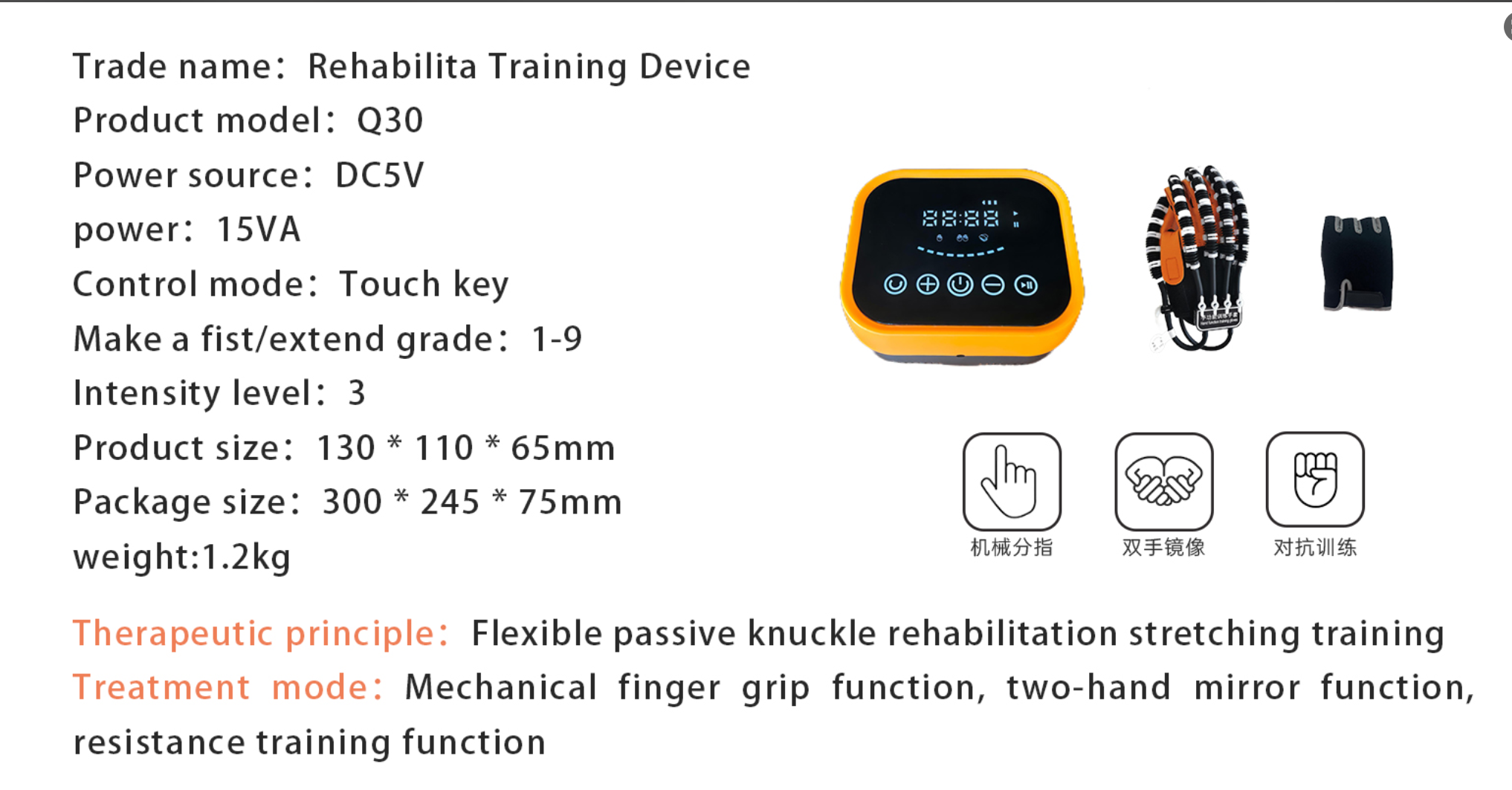
Fortunately, advancements in medical technology have paved the way for more effective, accessible rehabilitation solutions, and QIJIA’s soft hand rehabilitation robotic gloves for stroke stand out as a game-changer in this space. Designed to support stroke survivors through every phase of recovery, QIJIA’s rehabilitation robot gloves combine comfort, precision, and innovation to make meaningful progress achievable.
Stroke remains a leading cause of long-term disability globally, with approximately 60-80% of survivors experiencing upper-limb motor impairments, including limited hand movement and grip strength. Traditional rehabilitation methods often rely on manual therapy, which can be time-consuming, labor-intensive, and inconsistent—especially for patients recovering at home.
This is where QIJIA’s stroke rehabilitation robotic glove steps in: it bridges the gap between clinical therapy and at-home practice, providing consistent, targeted training that adapts to each patient’s unique needs.
At the core of QIJIA’s innovation is the rehabilitation training glove design, engineered to prioritize both effectiveness and comfort. Unlike rigid, cumbersome alternatives, QIJIA’s soft hand rehabilitation robotic gloves for stroke feature a lightweight, breathable material that conforms to the hand’s natural shape, reducing discomfort during extended use.
The gloves are equipped with gentle, motorized fingers that guide the hand through controlled flexion and extension movements, mimicking the natural motion of a healthy hand. This targeted stimulation helps activate neural pathways, rebuild muscle strength, and improve coordination—key factors in restoring hand function after stroke.
The effectiveness of QIJIA’s rehabilitation robot gloves is backed by clinical research and real-world results. A recent study comparing soft robotic gloves to traditional mirror therapy found that patients using robotic gloves experienced significantly greater improvements in hand function, grip strength, and upper-extremity mobility—and these gains were sustained for up to 6 months after treatment.
QIJIA’s gloves take this a step further with adjustable intensity levels (1-9 gears) and an omnidirectional mirror function, allowing therapists and patients to tailor the training to individual recovery goals. Whether a patient is in the early stages of recovery, struggling with severe hand weakness, or working to refine fine motor skills, the gloves adapt to their progress, ensuring consistent, measurable improvement.
To truly understand the impact of QIJIA’s stroke rehabilitation robotic glove, consider the story of Mr. Thompson, a 68-year-old stroke survivor who suffered a middle cerebral artery infarct—one of the most common types of ischemic stroke, often resulting in severe upper-limb impairment.
After his stroke, Mr. Thompson was unable to move his right hand at all; he couldn’t grasp objects, feed himself, or perform basic self-care tasks. His physical therapist recommended QIJIA’s soft hand rehabilitation robotic gloves for stroke as part of his at-home rehabilitation plan.
For 8 weeks, Mr. Thompson used the rehabilitation training glove for 30 minutes twice a day, following a personalized program designed by his therapist. The glove’s gentle motorized movements helped stretch his stiff fingers and activate dormant muscles, while the adjustable intensity allowed him to gradually build strength without pain.
After just 4 weeks, he was able to flex his fingers slightly; by the end of the 8-week program, he could grasp a glass and hold it independently. Six months later, Mr. Thompson continues to use QIJIA’s rehabilitation robot gloves and has regained enough hand function to button his shirts, use a fork, and even hold his granddaughter’s hand—a milestone he once thought impossible.
What sets QIJIA apart from other rehabilitation robot gloves is its commitment to accessibility and user-centric design. The gloves are easy to set up and use, with a 2.4-inch LCD display and touch button control that even elderly patients can navigate with ease.
They are also certified by CE, ISO 13485, and ISO 9001, ensuring the highest standards of safety and quality for medical use. Whether used in clinical settings, rehabilitation centers, or at home, QIJIA’s soft hand rehabilitation robotic gloves for stroke provide a reliable, effective solution for stroke survivors seeking to regain control of their hands—and their lives.
Recovery after stroke is a journey, but it doesn’t have to be a lonely or frustrating one. QIJIA’s stroke rehabilitation robotic glove is more than just a device—it’s a partner in recovery, offering consistent support, measurable progress, and hope for a better quality of life.
For stroke survivors, physical therapists, and caregivers alike, QIJIA’s rehabilitation training glove represents the future of stroke rehabilitation: one where technology empowers individuals to take charge of their recovery, one gentle movement at a time.