







Transcranial Magnetic Stimulation (TMS): Exploring New Possibilities for Mental Health and Neurological Care
In today's fast-paced world, mental health challenges are becoming increasingly common. Problems such as depression, anxiety, sleep disorders, attention difficulties, and emotional stress are affecting people of different ages, from children and teenagers to adults and seniors.
Long-term mental stress and neurological imbalance may influence daily life, learning ability, work efficiency, sleep quality, and overall well-being. With the development of modern neuroscience, Transcranial Magnetic Stimulation (TMS) has emerged as a non-invasive neuromodulation technology that provides new possibilities for professional mental health and neurological care.
Understanding Mental Health Challenges in Modern Society
Mental and neurological conditions are not simply temporary emotional changes. When symptoms continue for a long period, they may affect concentration, communication, sleep patterns, and quality of life.
Common conditions associated with neurological and mental health concerns include:
Depression and persistent low mood
Anxiety and excessive stress responses
Sleep problems and chronic insomnia
Attention difficulties such as ADHD
Emotional instability and nervous tension
Reduced concentration and cognitive challenges
Stress-related neurological symptoms
Early attention and professional evaluation are important because untreated mental health problems may gradually influence personal, academic, professional, and social development.
Children and Teenagers: Attention Difficulties and ADHD Support
Attention Deficit Hyperactivity Disorder (ADHD) is a common neurodevelopmental condition that may affect children and teenagers. Symptoms can include difficulty maintaining attention, impulsive behavior, restlessness, and challenges with learning or daily organization.
For families and healthcare professionals, finding suitable approaches to support brain function and behavioral management is an important topic. TMS technology has attracted research interest because it can provide targeted stimulation to specific brain regions through magnetic pulses.
As a non-invasive technology, TMS offers another direction for exploring neurological regulation and supporting personalized healthcare strategies.
Depression and Emotional Health: A Growing Healthcare Concern
Depression is one of the most widely recognized mental health conditions worldwide. People experiencing depression may face persistent sadness, loss of interest, fatigue, sleep changes, and difficulty concentrating.
For some individuals, conventional approaches may not provide sufficient improvement, creating a need for additional therapeutic options. TMS technology has been widely studied in depression management, especially repetitive Transcranial Magnetic Stimulation (rTMS), which uses repeated magnetic pulses to influence neural activity in targeted brain areas.
Clinical research has explored TMS applications for depression, including treatment-resistant depression, under professional medical supervision. citeturn0search1turn0search6
Anxiety, Stress, and Nervous System Overload
Modern lifestyles often expose people to continuous pressure from work, study, and personal responsibilities. Long-term stress may contribute to symptoms such as:
Constant worry
Difficulty relaxing
Emotional sensitivity
Muscle tension
Poor concentration
Sleep disturbance
Research has explored TMS as a potential neuromodulation approach for conditions involving anxiety and emotional regulation. By applying controlled magnetic stimulation, TMS aims to influence specific neural circuits associated with brain activity.
Sleep Problems and Insomnia: The Hidden Impact on Health
Sleep plays an essential role in physical recovery, emotional balance, memory, and cognitive performance. However, many adults experience sleep problems caused by stress, anxiety, irregular schedules, or neurological factors.
Common sleep-related concerns include:
Difficulty falling asleep
Frequent nighttime awakening
Poor sleep quality
Daytime fatigue
Reduced concentration
TMS has also been investigated in sleep-related research, including insomnia and sleep regulation, as researchers continue exploring the relationship between brain activity and sleep quality.
For healthcare providers, advanced neuromodulation technologies provide new opportunities to investigate personalized approaches for patients with sleep-related concerns. citeturn0search0
How Does Transcranial Magnetic Stimulation (TMS) Work?
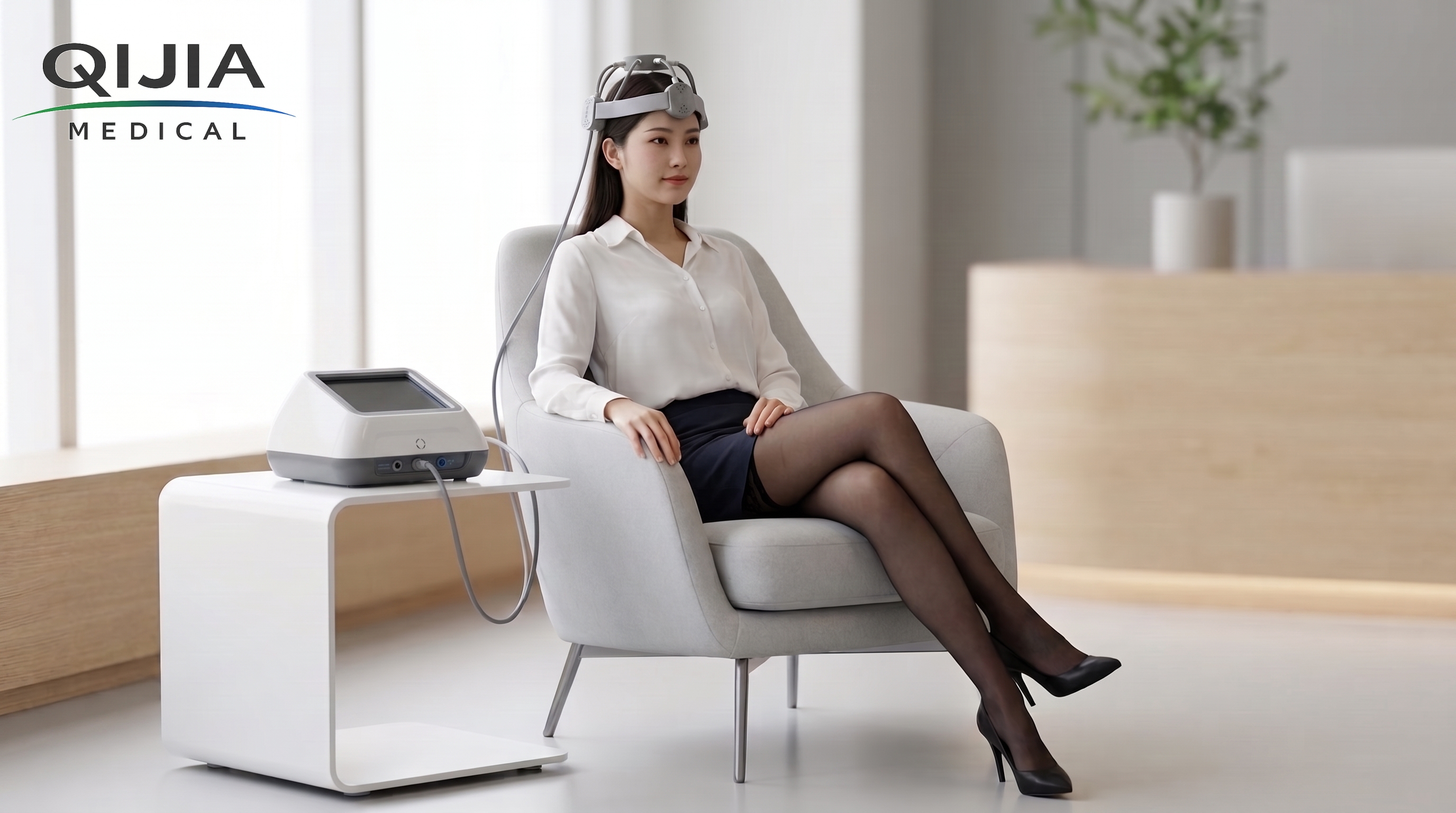
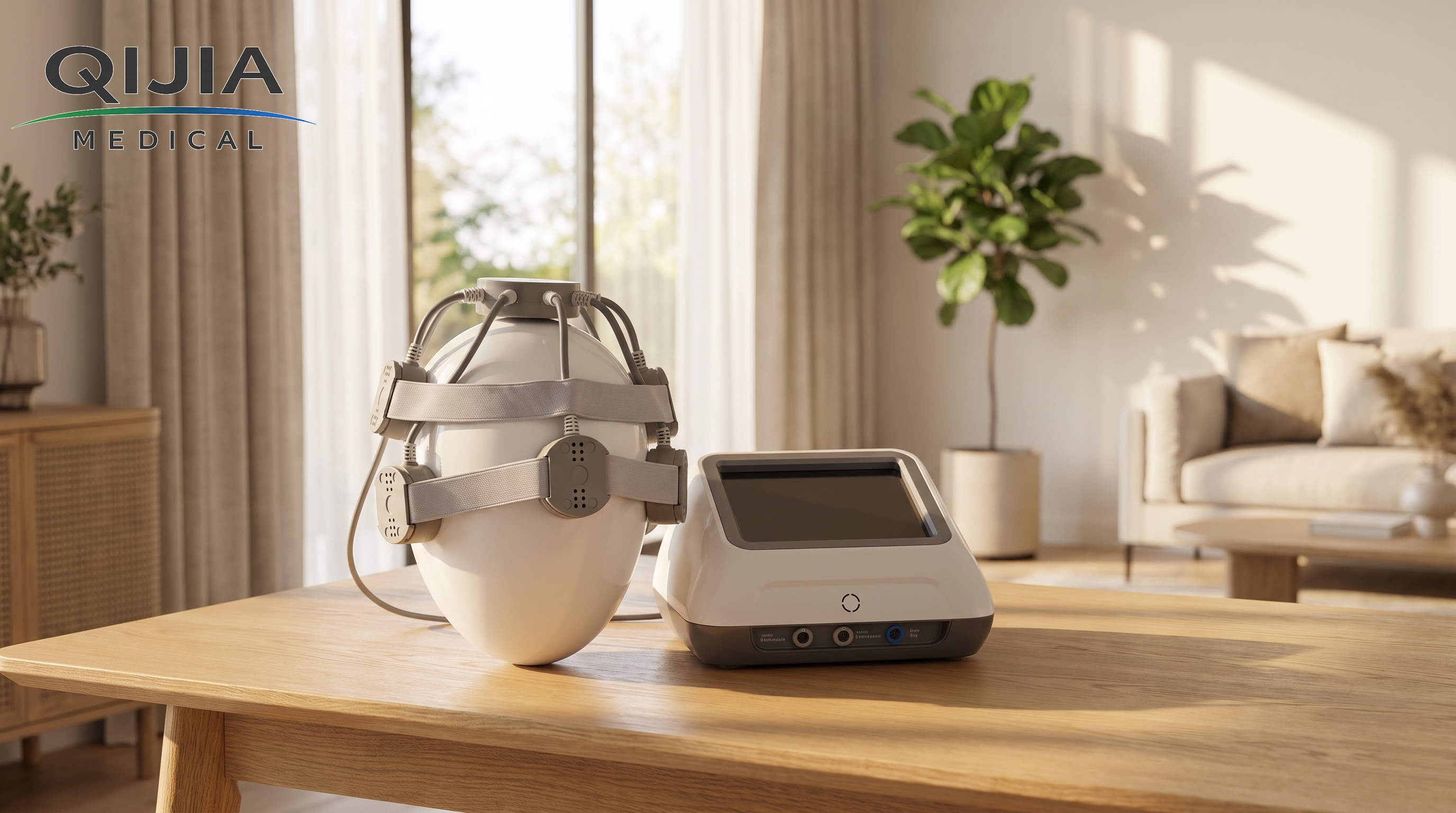
Transcranial Magnetic Stimulation (TMS) uses electromagnetic pulses generated by a stimulation coil placed near the scalp. These magnetic pulses can pass through the skull and create small electrical currents that influence activity in targeted brain areas.
Unlike invasive procedures, TMS does not require surgery or implanted devices. It is performed externally and is generally considered a non-invasive brain stimulation technology.
Different stimulation parameters can be adjusted according to clinical applications, allowing healthcare professionals to explore targeted neuromodulation approaches.
QIJIA TMS Device: Supporting Professional Neuromodulation Applications
QIJIA Medical develops advanced medical equipment solutions for healthcare professionals, including Transcranial Magnetic Stimulation systems designed for professional applications.
Our TMS system integrates intelligent control technology and multifunctional design, providing healthcare institutions with an efficient platform for neurological and mental health applications.
Learn more about our Transcranial Magnetic Stimulation (TMS) Device.
OEM/ODM Solutions for Global Healthcare Partners
As a professional medical equipment manufacturer, QIJIA Medical provides OEM and ODM cooperation for international distributors, clinics, hospitals, and healthcare organizations.
With experience in medical device research, production, and quality management, we support global partners looking for reliable medical technology solutions.
Discover more about our company and OEM/ODM capabilities:
Contact QIJIA Medical for TMS Device Solutions
If you are interested in Transcranial Magnetic Stimulation technology, medical equipment distribution, or partnership opportunities, please contact our professional team.
Frequently Asked Questions (FAQ)
1. What is Transcranial Magnetic Stimulation (TMS)?
TMS is a non-invasive brain stimulation technology that uses magnetic pulses to influence activity in specific brain regions. It is widely researched and applied in neurological and mental health fields.
2. What conditions can TMS be used for?
TMS has been studied and clinically applied in areas including depression, obsessive-compulsive disorder, migraine, and other neurological or psychiatric conditions depending on regional approvals and medical evaluation.
3. Is TMS a surgery?
No. TMS is a non-invasive procedure that does not require surgery or implantation. The stimulation is delivered externally through a magnetic coil.
4. Can TMS help with sleep problems?
Research has explored the relationship between TMS and sleep regulation. Healthcare professionals may evaluate whether TMS technology is suitable based on individual conditions.
5. Can clinics and distributors cooperate with QIJIA Medical?
Yes. QIJIA Medical provides OEM/ODM cooperation and medical equipment solutions for global healthcare partners.