






Hand Rehabilitation After Stroke: Why Finger Movement Training Matters for Long-Term Recovery
A stroke can change a person's life within minutes. While emergency treatment focuses on protecting the brain and limiting further injury, the recovery process often continues long after the patient leaves the hospital. For many stroke survivors, one of the most frustrating challenges is regaining control of the hand.
Difficulty opening the fingers, closing the hand, holding a cup, buttoning clothing, or picking up small objects can affect everyday independence. These challenges are not simply inconveniences. When hand function is significantly impaired, even basic self-care activities may require ongoing assistance from family members or professional caregivers.
Hand rehabilitation after stroke is therefore an important part of a comprehensive recovery plan. Through individualized rehabilitation, repeated movement practice, and appropriate assistive equipment, patients may work toward improving movement control and participating more actively in daily life. Smart hand rehabilitation devices can be considered as one component of this process when they match the patient's functional needs and clinical rehabilitation plan.
1. How Can a Stroke Affect Hand Function?
A stroke occurs when blood flow to part of the brain is interrupted or when bleeding damages brain tissue. Because the brain controls movement, sensation, coordination, and other essential functions, an injury to relevant areas can interfere with the signals responsible for hand and finger movement.
The effects vary considerably from one person to another. Some stroke survivors retain partial finger movement but struggle with precision and coordination. Others experience substantial weakness or may be unable to open or close the affected hand voluntarily.
Common post-stroke hand and upper-limb difficulties include:
Muscle weakness: Reduced strength can make it difficult to grip, release, or manipulate everyday objects.
Limited finger extension: Some patients struggle to straighten their fingers after making a fist, which can interfere with reaching and grasping.
Difficulty with finger flexion: Closing the hand around an object may become difficult or poorly coordinated.
Increased muscle tone or spasticity: Some survivors develop stiffness and involuntary muscle activity that can restrict comfortable movement.
Reduced coordination and sensation: Patients may have difficulty controlling precise movements or accurately sensing the position of the affected hand.
These impairments can occur individually or together. This is why a rehabilitation plan should be based on an appropriate assessment rather than assuming that every stroke survivor has the same needs.
2. Why Is Post-Stroke Hand Dysfunction a Serious Concern?
Hand function plays a central role in daily living. When movement is restricted, the consequences can extend beyond the affected fingers and influence a person's independence, safety, emotional well-being, and ability to participate in family or community life.
2.1 Reduced Independence in Everyday Activities
Many routine tasks depend on coordinated hand movements. Eating with utensils, washing, dressing, handling personal belongings, and preparing food may become difficult when the affected hand cannot open, close, or grasp objects reliably.
As a result, stroke survivors may need more assistance with activities they previously performed without thinking. Rehabilitation aims to address these practical limitations, not just isolated movements, so that progress can eventually translate into meaningful daily activities.
2.2 Stiffness and Secondary Movement Limitations
When an affected hand remains difficult to move, reduced use and limited joint movement can contribute to further functional problems. Some patients develop increased muscle tone, soft-tissue shortening, discomfort, or reduced joint range of motion.
These complications do not develop in every patient, and their causes differ. However, they highlight the importance of monitoring hand position, movement, comfort, and joint mobility throughout rehabilitation. Patients with substantial weakness or spasticity may need specific positioning strategies or other interventions prescribed by a qualified professional.
2.3 Greater Caregiver Demands
When a stroke survivor cannot use one hand effectively, family members and caregivers may need to provide additional help with personal care and household activities. The demands can increase when hand impairment occurs alongside difficulties with walking, communication, or cognition.
Structured rehabilitation can help patients work toward achievable functional goals while giving caregivers clearer guidance on safe assistance. Appropriate training equipment may also help organize certain exercises within a professional care plan.
2.4 Long-Term Functional Limitations
Recovery after stroke varies widely. Some people make substantial progress, while others continue to experience limitations for months or years. The initial severity of the stroke, the type of impairment, other health conditions, access to rehabilitation, and individual response to treatment can all influence the recovery process.
Persistent hand dysfunction should not be interpreted as evidence that further rehabilitation is pointless. Goals and treatment strategies can be reassessed over time. Even when complete restoration of movement is not possible, rehabilitation may focus on preserving available function, improving the performance of selected tasks, and supporting greater independence.
3. Why Is Repetitive Hand Movement Practice Important After Stroke?
Recovery of hand function often requires more than waiting for strength to return. Rehabilitation commonly includes structured movement practice, task-specific exercises, and repeated opportunities to use the affected arm and hand in ways that match the patient's abilities.
Repeated practice is intended to support motor learning and help patients work toward more controlled, purposeful movement. The exercises may involve reaching, grasping, releasing objects, opening the fingers, or performing other activities selected by the rehabilitation team.
However, more exercise is not automatically better. The appropriate type, intensity, duration, and progression of training depend on the patient's condition and tolerance. Exercises should be adjusted when there is pain, excessive fatigue, increasing stiffness, or other signs that the program needs review.
3.1 Training Should Match the Patient's Current Ability
A patient who can actively move several fingers may benefit from a different approach than someone who has very limited voluntary movement. Rehabilitation professionals assess factors such as muscle strength, active range of motion, muscle tone, sensation, joint mobility, and functional goals when selecting exercises.
Some patients can participate in active exercises, while others may require assistance to complete particular movements. Not every hand rehabilitation device supports every training method, so the equipment's actual functions must be considered before it is incorporated into a program.
3.2 Consistency Matters Throughout Recovery
Stroke rehabilitation is not necessarily completed when a patient is discharged from a hospital or rehabilitation center. Continued assessment and appropriate practice may remain important during the transition to community or home-based care.
A practical program should establish achievable goals, monitor progress, and adjust exercises when necessary. The objective is to make rehabilitation purposeful and sustainable rather than encouraging repetitive movements without a clear plan.
4. How Can a Smart Hand Rehabilitation Device Support Training?
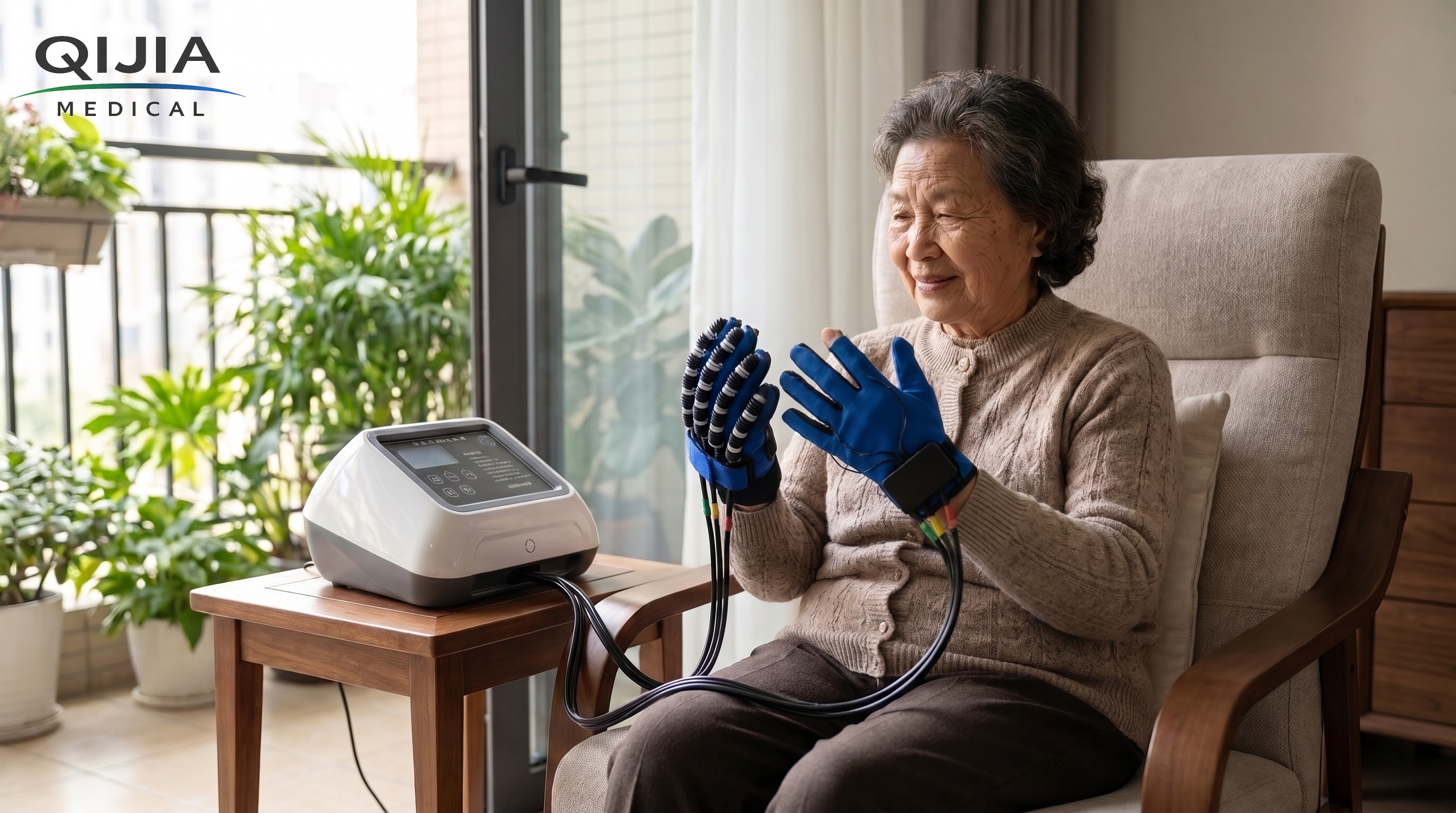
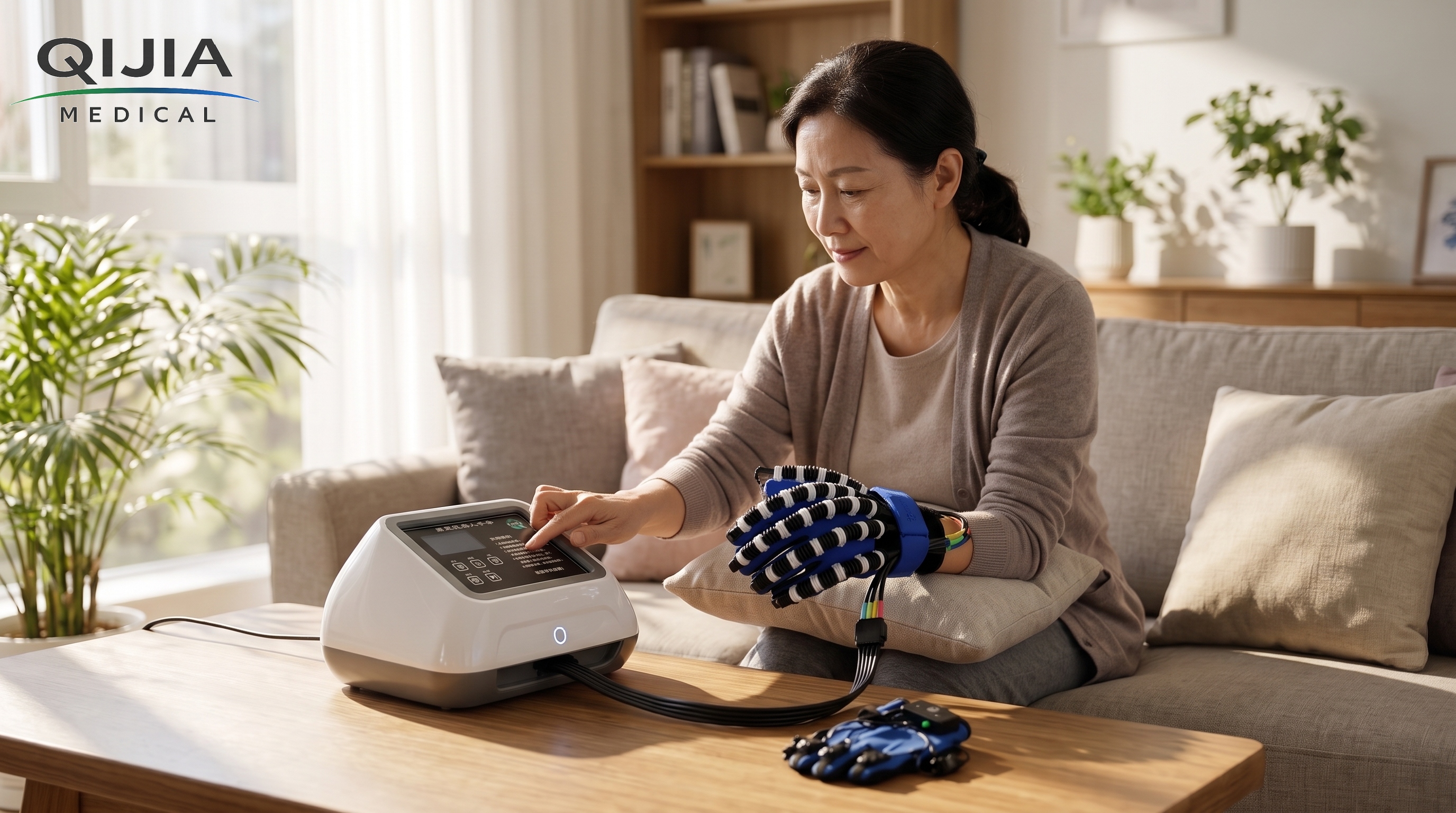
Smart hand rehabilitation equipment is designed to assist specific aspects of hand movement training. Depending on the device's design, it may help patients practice finger opening and closing movements through a structured training routine.
For rehabilitation providers, the potential value of a device lies in its ability to support organized exercise sessions and provide a repeatable training process. It does not replace clinical assessment, individualized therapy, or the broader rehabilitation program.
4.1 Supporting Repeated Finger Flexion and Extension
Finger flexion and extension are fundamental components of many hand movements. Closing the fingers contributes to grasping, while opening them is important for releasing objects and preparing the hand for another movement.
For patients whose rehabilitation plan includes these movement patterns, an appropriate hand rehabilitation device may help facilitate repeated practice. The suitability of assisted movement depends on the patient's residual motor function, joint condition, muscle tone, and the capabilities of the specific equipment.
4.2 Providing Adjustable Training Parameters
Different patients have different rehabilitation needs. Equipment with adjustable training settings can give providers a way to configure sessions according to the available functions of the device and the prescribed plan.
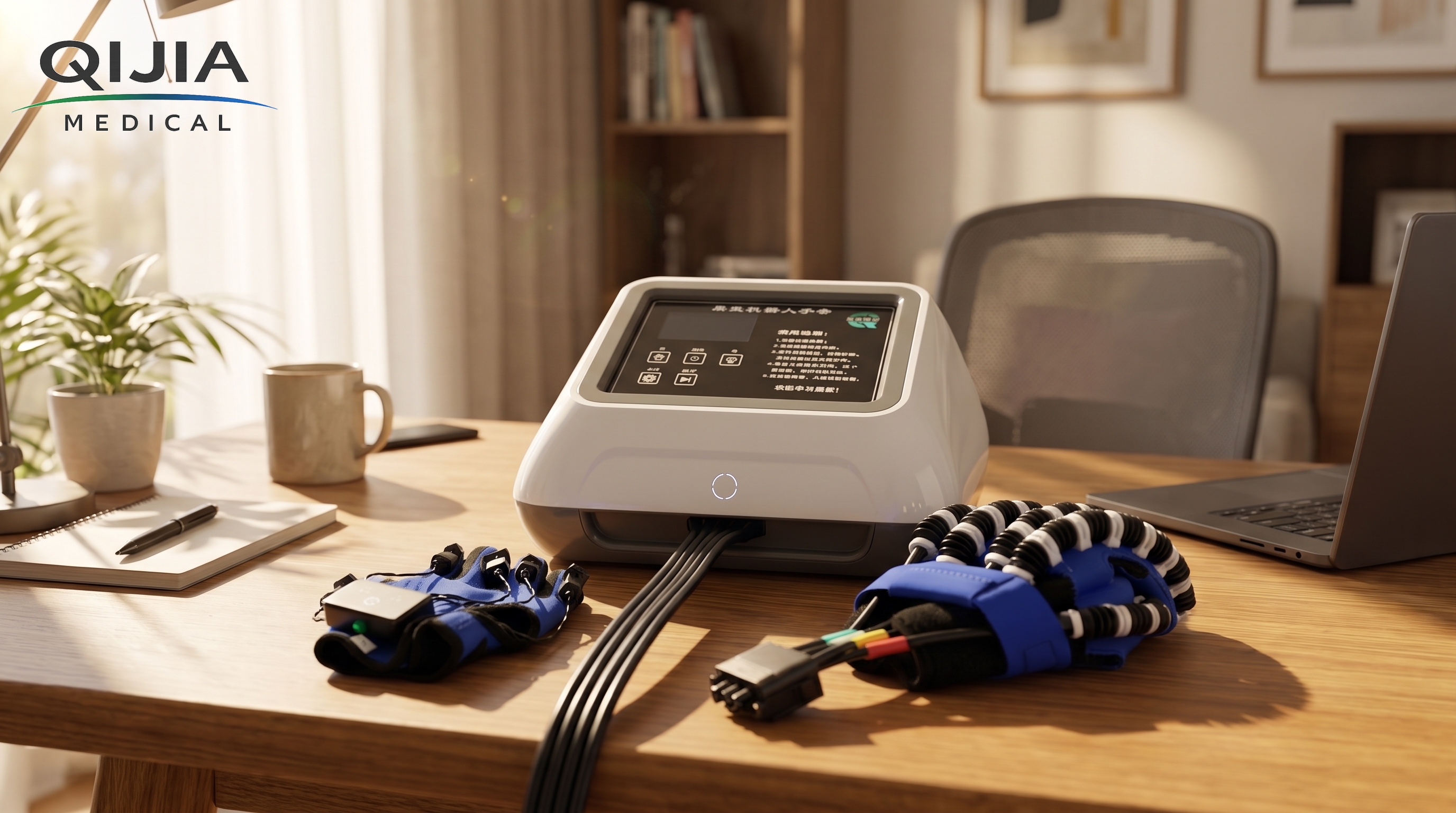
QIJIA MEDICAL's smart hand rehabilitation glove series includes adjustable training levels and session durations. These settings can support a more structured training routine, although the appropriate configuration must be determined according to the device instructions and the patient's assessed needs.
4.3 Supporting Rehabilitation Workflows in Clinical Settings
Hospitals, rehabilitation departments, and therapy centers often need equipment that can be incorporated into established clinical workflows. Hand rehabilitation equipment may serve as one tool within a wider program that includes therapist-guided exercises, functional task practice, patient education, and progress assessment.
When evaluating a device, rehabilitation providers should consider the movement patterns it supports, adjustment options, ease of operation, patient comfort, cleaning requirements, and the level of professional supervision needed.
5. QIJIA MEDICAL Smart Hand Rehabilitation Glove: A Training Solution for Hand Rehabilitation
QIJIA MEDICAL provides rehabilitation equipment intended for professional and rehabilitation-related applications. Its smart hand rehabilitation glove series is designed around hand movement training and can be evaluated by rehabilitation providers seeking equipment to support structured finger movement exercises.
Depending on the model and its confirmed configuration, the product series offers the following features:
Adjustable training levels: Training levels 1–9 allow the settings to be adjusted within the device's available range.
Adjustable session duration: Training time can be set from 5 to 30 minutes.
Finger movement practice: The system can be demonstrated performing repeated finger opening and closing movements according to its operating instructions.
Multiple model options: The series includes DJ10, DJ20, and DJ30. Buyers should confirm the exact functions and configuration of each model before selecting equipment.
Mirror-glove functionality on DJ30: The DJ30 model includes a mirror-glove feature. Its operating method and suitability for individual patients should be verified against the product documentation.
These features may be relevant to rehabilitation providers looking for equipment to support selected hand movement exercises. They should not be interpreted as proof that the device can independently restore hand function, eliminate spasticity, or guarantee recovery after stroke.
Product selection should be guided by the intended use, the patient's rehabilitation assessment, and the functions documented for the specific model.
Learn more about QIJIA MEDICAL's rehabilitation equipment and related solutions on the limb rehabilitation assessment and coordination training system product page.
6. Who May Need Hand Rehabilitation Equipment After Stroke?
Hand rehabilitation equipment may be considered for selected stroke survivors whose rehabilitation plans include supported or repeated hand movement practice. However, the appropriate candidate depends on the device's intended use and the individual's clinical condition.
Potential assessment considerations include:
Stroke survivors experiencing difficulty opening or closing the affected hand.
Patients with reduced finger movement who have been assessed for appropriate assisted exercise.
Individuals participating in a structured upper-limb rehabilitation program.
Patients transitioning between clinical rehabilitation and an approved home-based exercise plan.
These are general rehabilitation considerations, not a definitive list of indications for every smart hand rehabilitation glove. Severe spasticity, joint contractures, unstable injuries, pain, skin problems, or other medical concerns may affect whether a particular device can be used safely.
7. Important Safety Considerations Before Training
Post-stroke rehabilitation should be individualized. Before using hand rehabilitation equipment, a qualified healthcare professional should assess whether the proposed movement pattern is appropriate and determine any necessary precautions.
Patients and caregivers should pay particular attention to the following points:
Follow professional guidance: Do not begin or modify a rehabilitation program without appropriate instructions.
Check hand and joint condition: Pain, swelling, restricted joint movement, or other concerns may require evaluation before training.
Monitor skin and comfort: Check for pressure, redness, irritation, or discomfort associated with the glove or its components.
Avoid forcing movement: Do not force the fingers into a position that causes pain or excessive resistance.
Use the correct settings: Follow the product instructions and the settings recommended for the individual patient.
Reassess regularly: Training goals and equipment suitability may change as the patient's condition and abilities evolve.
Hand rehabilitation equipment is an adjunct to appropriate care, not a substitute for medical treatment or professional rehabilitation. Sudden new weakness, facial drooping, speech difficulties, or other possible stroke symptoms require immediate emergency medical attention rather than exercise.
8. Choosing Hand Rehabilitation Equipment for a Hospital or Rehabilitation Center
For healthcare providers and medical equipment distributors, selecting a suitable device involves more than comparing product appearance or price. The equipment should match the intended patient population, the rehabilitation workflow, and the functional requirements of the facility.
Before purchasing, buyers may wish to evaluate:
The documented intended use and supported movement patterns.
Available training levels, duration settings, and model-specific features.
Patient fitting, comfort, and operating procedures.
Cleaning, maintenance, user training, and technical support requirements.
Product documentation, regulatory status, and market-specific compliance requirements.
The supplier's manufacturing capabilities and options for OEM/ODM cooperation, where available.
For distributors and healthcare organizations developing their rehabilitation equipment portfolio, these considerations can help ensure that product selection is based on practical requirements rather than unsupported expectations about clinical outcomes.
9. Work with QIJIA MEDICAL on Rehabilitation Equipment Solutions
As a medical equipment manufacturer offering rehabilitation-related products, QIJIA MEDICAL works with healthcare businesses and distribution partners seeking equipment solutions for their target markets.
For professional buyers, product discussions can cover model specifications, intended applications, configuration details, product documentation, and potential OEM/ODM cooperation. The exact scope of customization and cooperation should be confirmed with the QIJIA MEDICAL team.
To learn more about the company, manufacturing background, and cooperation opportunities, visit the QIJIA MEDICAL About Us page.
If you are a medical equipment distributor, hospital purchasing representative, rehabilitation center, or healthcare business interested in the smart hand rehabilitation glove series, you can contact QIJIA MEDICAL to discuss your requirements and request further product information.
Frequently Asked Questions (FAQ)
1. Why is hand rehabilitation important after a stroke?
A stroke can affect the brain pathways responsible for hand strength, finger movement, coordination, and sensation. These impairments may make everyday activities such as dressing, eating, and handling objects more difficult. Appropriate rehabilitation helps patients work toward functional goals and maintain or improve their ability to participate in daily life.
2. Can hand function improve months or years after a stroke?
Recovery varies from person to person, and improvement can continue for months or years after a stroke. The extent of recovery depends on factors such as the severity of the original injury, the type of impairment, and the individual's rehabilitation needs. Ongoing assessment can help identify appropriate goals and training strategies.
3. What does a smart hand rehabilitation glove do?
A smart hand rehabilitation glove is a type of equipment designed to support selected hand movement exercises. Depending on its configuration, it may facilitate repeated finger opening and closing movements. Its specific functions should be verified in the product documentation, and it should be used as part of an appropriate rehabilitation plan.
4. Is a smart hand rehabilitation glove suitable for every stroke survivor?
No. Suitability depends on the patient's movement ability, muscle tone, joint mobility, skin condition, medical history, and the device's intended use. A qualified rehabilitation professional should assess the patient before recommending a specific device or training method.
5. Can patients use a hand rehabilitation device at home?
Home use may be appropriate for selected patients when the device is intended for that setting and a healthcare professional has confirmed its suitability. Patients and caregivers should understand the operating instructions, prescribed settings, safety precautions, and when to seek professional advice.
6. What training settings are available on the QIJIA MEDICAL smart hand rehabilitation glove series?
The product information available for the series specifies adjustable training levels from 1 to 9 and session durations from 5 to 30 minutes. The DJ10, DJ20, and DJ30 models may differ in their functions and configurations, so buyers should confirm the relevant specifications for the model they intend to purchase.
7. Does the DJ30 model support mirror-glove functionality?
Yes. The DJ30 model is identified as having a mirror-glove feature. Buyers should consult the product documentation or contact QIJIA MEDICAL to confirm how this feature operates and whether it is appropriate for their intended rehabilitation application.
8. Can a hand rehabilitation glove replace conventional stroke rehabilitation?
No. A hand rehabilitation glove should not be regarded as a replacement for comprehensive stroke rehabilitation. Depending on the patient's needs, recovery may involve occupational therapy, physical therapy, functional task practice, medical management, and other individualized interventions. Equipment can support selected exercises within this broader plan.
9. How can hospitals and distributors inquire about QIJIA MEDICAL rehabilitation equipment?
Hospitals, rehabilitation centers, medical equipment distributors, and other professional buyers can visit the QIJIA MEDICAL product page to review related rehabilitation equipment, explore the company's background and cooperation options, or contact the team to request further information about model specifications and purchasing requirements.