







Why Airway Secretions Become Difficult to Remove: The Science Behind Mucociliary Clearance
The lungs are constantly exposed to airborne particles, microorganisms and environmental irritants. Every breath introduces substances that the respiratory system must identify, trap and remove. To accomplish this, the airways rely on a sophisticated biological defense mechanism known as mucociliary clearance.
In healthy individuals, this process operates continuously, usually without conscious effort. Tiny hair-like structures called cilia work together with a protective mucus layer to transport trapped particles away from the lower respiratory tract. However, when this mechanism becomes impaired, mucus may accumulate, become increasingly difficult to move and interfere with normal airway function.
This problem is particularly important in critically ill patients, individuals receiving mechanical ventilation, and people with respiratory muscle weakness or chronic respiratory conditions. When natural clearance mechanisms cannot keep pace with secretion production, retained mucus can contribute to airway obstruction, impaired ventilation and potentially serious pulmonary complications.
Understanding the science behind mucociliary clearance helps explain why effective airway secretion management requires more than simply reducing mucus production. It also requires maintaining secretion mobility and supporting the physical removal of accumulated mucus.
1. Mucociliary Clearance: The Lungs' Natural Cleaning System
Mucociliary clearance is one of the most important mechanical defense mechanisms of the respiratory system. It protects the airways by trapping inhaled particles and transporting them toward the throat, where they can be swallowed or expelled.
This process depends on the coordinated interaction of three essential components: airway mucus, ciliated epithelial cells and the airway surface liquid.
The Role of Airway Mucus
Mucus is not simply an unwanted substance produced by the respiratory tract. It is a specialized biological secretion that forms a protective barrier along the airway surface.
Its main functions include:
Capturing inhaled dust, microorganisms and environmental particles.
Protecting airway epithelial cells from external irritants.
Supporting the removal of potentially harmful substances.
Maintaining an appropriate protective environment for the respiratory tract.
Mucus contains water, mucins, proteins, salts and other biological components. Mucins are large glycoproteins responsible for many of the structural and physical properties of airway mucus.
Under healthy conditions, mucus maintains a balance between sufficient viscosity to trap particles and sufficient mobility to allow effective transportation by cilia.
How Cilia Transport Mucus
The airway epithelium contains millions of microscopic cilia. These structures perform coordinated, repeated movements that propel the overlying mucus layer toward the upper respiratory tract.
Each cilium has a forward power stroke that helps move mucus and a recovery stroke that returns it to its starting position. When large numbers of cilia beat in a coordinated pattern, they generate continuous directional transport.
This mechanism can be compared to a microscopic conveyor system: mucus captures unwanted particles, while coordinated ciliary movement transports them away from the deeper airways.
However, this process is highly dependent on the surrounding airway environment. If mucus becomes excessively concentrated or the cilia lose their normal function, the efficiency of mucus transportation can decline significantly.
Why Airway Surface Liquid Matters
For cilia to function effectively, the airway surface must maintain an appropriate level of hydration.
A thin layer of liquid surrounding the cilia, commonly described as the periciliary liquid layer, allows them to move freely and interact properly with the overlying mucus.
When this liquid layer becomes depleted, mucus may become more concentrated and difficult to transport. Excessive mucus concentration can also interfere with the movement of cilia, creating a cycle in which impaired hydration and reduced mucus clearance reinforce each other.
Therefore, healthy airway clearance depends not only on the presence of cilia but also on the physical properties of mucus and the hydration of the airway surface.
2. Why Does Mucociliary Clearance Become Impaired?
Several physiological and environmental factors can interfere with normal mucociliary function. In critically ill patients, multiple disturbances may occur simultaneously, making airway secretion management particularly challenging.
Inflammation and Changes in Mucus Composition
Respiratory infections and inflammatory conditions can stimulate increased mucus production. At the same time, inflammation may alter the composition and physical properties of airway secretions.
In some circumstances, mucus becomes more concentrated, adhesive and difficult to transport. Excessive secretion production can also exceed the natural clearance capacity of the respiratory tract.
When these changes occur together, mucus may remain inside the airways for longer periods, increasing the possibility of secretion accumulation and mucus plugging.
Dehydration and Airway Surface Liquid Imbalance
Water plays an essential role in maintaining the physical characteristics of mucus. When airway surface hydration becomes inadequate, mucus concentration can increase, making it more difficult for cilia to transport.
In hospitalized patients, factors such as inadequate airway humidification, fluid imbalance and altered epithelial ion transport may contribute to disturbances in mucus hydration.
For patients receiving invasive mechanical ventilation, artificial airways bypass the natural warming and humidification functions of the upper respiratory tract. Appropriate humidification is therefore an important part of respiratory care.
Mechanical Ventilation and Artificial Airway Interference
Endotracheal tubes and tracheostomy tubes are essential for providing respiratory support to many critically ill patients. However, they also change the normal physiological environment of the airways.
Artificial airways bypass important upper respiratory defense mechanisms and can interfere with normal mucociliary transport. The presence of an endotracheal tube may also limit effective coughing and contribute to secretion accumulation.
In patients who require prolonged mechanical ventilation, these factors can create a persistent challenge: the lungs continue producing protective secretions, but the body's natural ability to remove them may be substantially reduced.
Reduced Cough Strength and Respiratory Muscle Weakness
Mucociliary transport and coughing are complementary mechanisms. Cilia gradually move mucus toward larger airways, while an effective cough generates airflow capable of expelling accumulated secretions.
Patients with neurological disorders, neuromuscular weakness, prolonged sedation or critical illness may have difficulty generating an effective cough.
Even when mucus has been transported toward the central airways, insufficient cough strength may prevent its effective removal.
This distinction is important: mobilizing secretions and actually expelling them are two different stages of airway clearance.
3. The Hidden Risks of Impaired Mucociliary Clearance
When mucus transportation becomes ineffective, the consequences can extend beyond simple coughing difficulties. Persistent secretion retention may interfere with ventilation, compromise airway patency and contribute to a range of respiratory complications.
Mucus Plugging and Airway Obstruction
One of the most concerning consequences of impaired mucus clearance is the formation of mucus plugs.
When concentrated secretions accumulate and become difficult to transport, they may obstruct portions of the bronchial tree. Depending on their location and severity, these obstructions can restrict airflow and interfere with normal ventilation.
In patients with limited respiratory reserve, even partial airway obstruction may create additional challenges for oxygenation and respiratory support.
Atelectasis and Reduced Lung Ventilation
A mucus plug can prevent air from reaching the lung tissue beyond the obstructed airway. As the trapped gas is gradually absorbed, the affected region may lose volume and develop atelectasis.
Atelectasis can reduce the amount of effectively ventilated lung tissue and contribute to ventilation-perfusion mismatch.
For critically ill patients, this is particularly concerning because they may already have compromised pulmonary function. Additional areas of poorly ventilated lung tissue can further complicate respiratory management.
Increased Risk of Secondary Respiratory Infection
The mucociliary system forms an important part of the lungs' natural defense against microorganisms.
When mucus is not effectively transported, trapped particles and microorganisms may remain within the respiratory tract for longer periods. Impaired airway defenses and retained secretions can contribute to conditions that favor respiratory infection.
In mechanically ventilated patients, the risk of ventilator-associated pneumonia is influenced by multiple factors, including aspiration, microbial exposure, host immunity and the use of artificial airways.
Although impaired secretion clearance is an important concern, it should not be interpreted as the sole cause of pneumonia. Effective airway management is one component of a broader infection prevention strategy.
Increased Respiratory Care Complexity
Persistent secretion accumulation can lead to repeated airway assessment, suctioning and additional respiratory interventions.
In patients who cannot independently clear their airways, secretion management may become an ongoing clinical challenge rather than an occasional procedure.
This is why recognizing impaired mucociliary clearance early and selecting appropriate supportive strategies are important aspects of comprehensive respiratory care.
4. Why Natural Mucus Transport Is Sometimes Not Enough
The respiratory system has an impressive ability to maintain airway cleanliness under normal conditions. However, its natural mechanisms are not designed to overcome every physiological disturbance.
When ciliary function is impaired, mucus becomes excessively concentrated or cough strength is significantly reduced, relying exclusively on natural clearance may not be sufficient.
Healthcare professionals may therefore consider additional airway clearance approaches according to the patient's condition.
These approaches can include:
Airway humidification: Helps maintain appropriate moisture conditions in patients receiving respiratory support.
Airway suctioning: Removes accessible secretions when patients cannot clear them effectively, particularly through artificial airways.
Chest physiotherapy: Uses positioning, percussion and manual techniques to assist secretion mobilization.
Mechanical insufflation-exsufflation: Uses positive and negative pressure to assist cough-related secretion removal in selected patients.
High-Frequency Chest Wall Oscillation: Uses repeated external chest wall compression and release to help mobilize airway secretions.
These approaches address different aspects of the airway clearance process. None should be regarded as a universal replacement for the others.
5. How HFCWO Technology Supports Airway Secretion Mobilization
High-Frequency Chest Wall Oscillation (HFCWO) introduces a mechanical approach to airway secretion management.
Unlike mucociliary clearance, which depends on the biological activity of airway cilia, HFCWO uses external mechanical energy to generate repeated chest wall oscillations.
Understanding the Working Principle
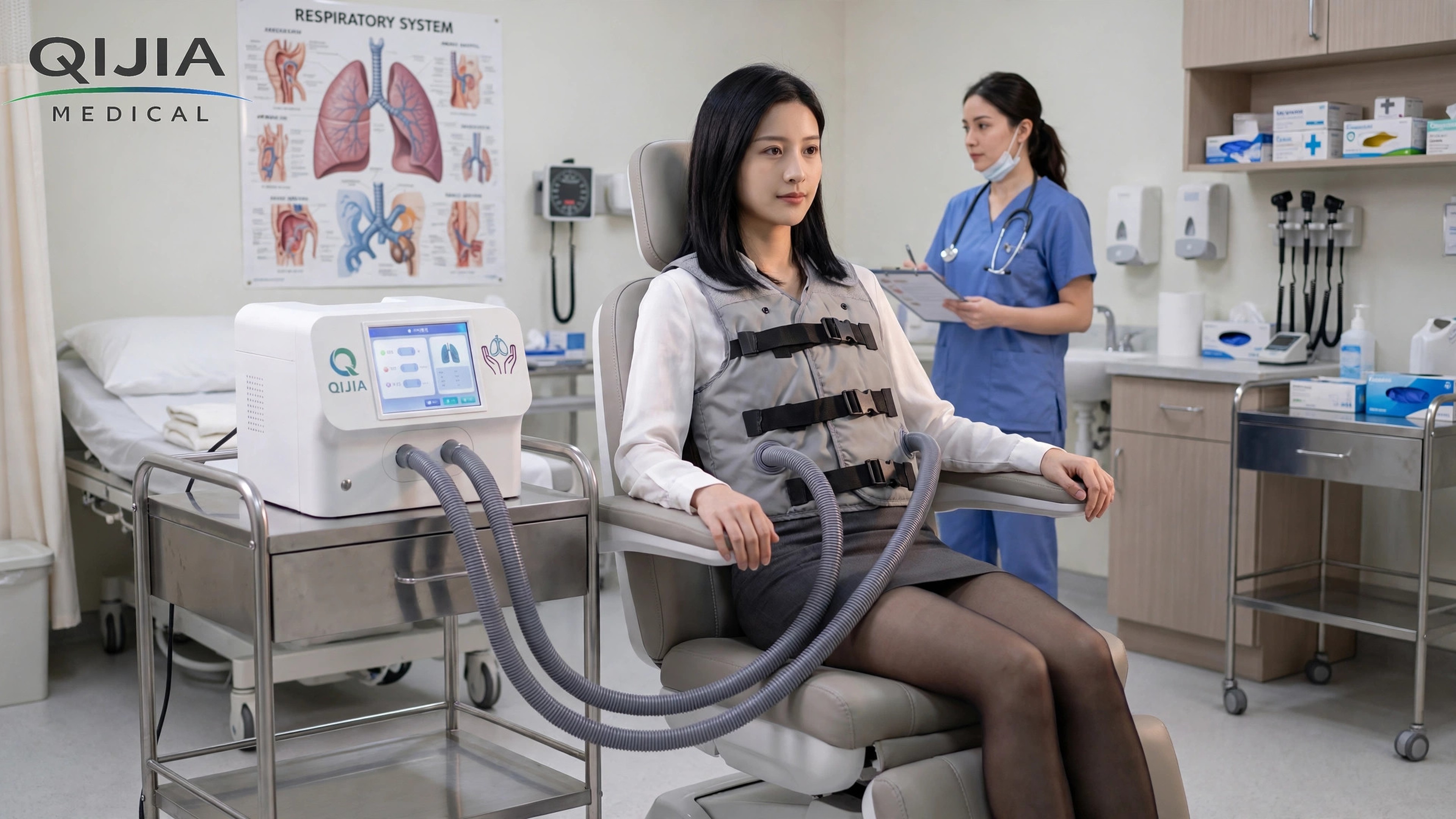
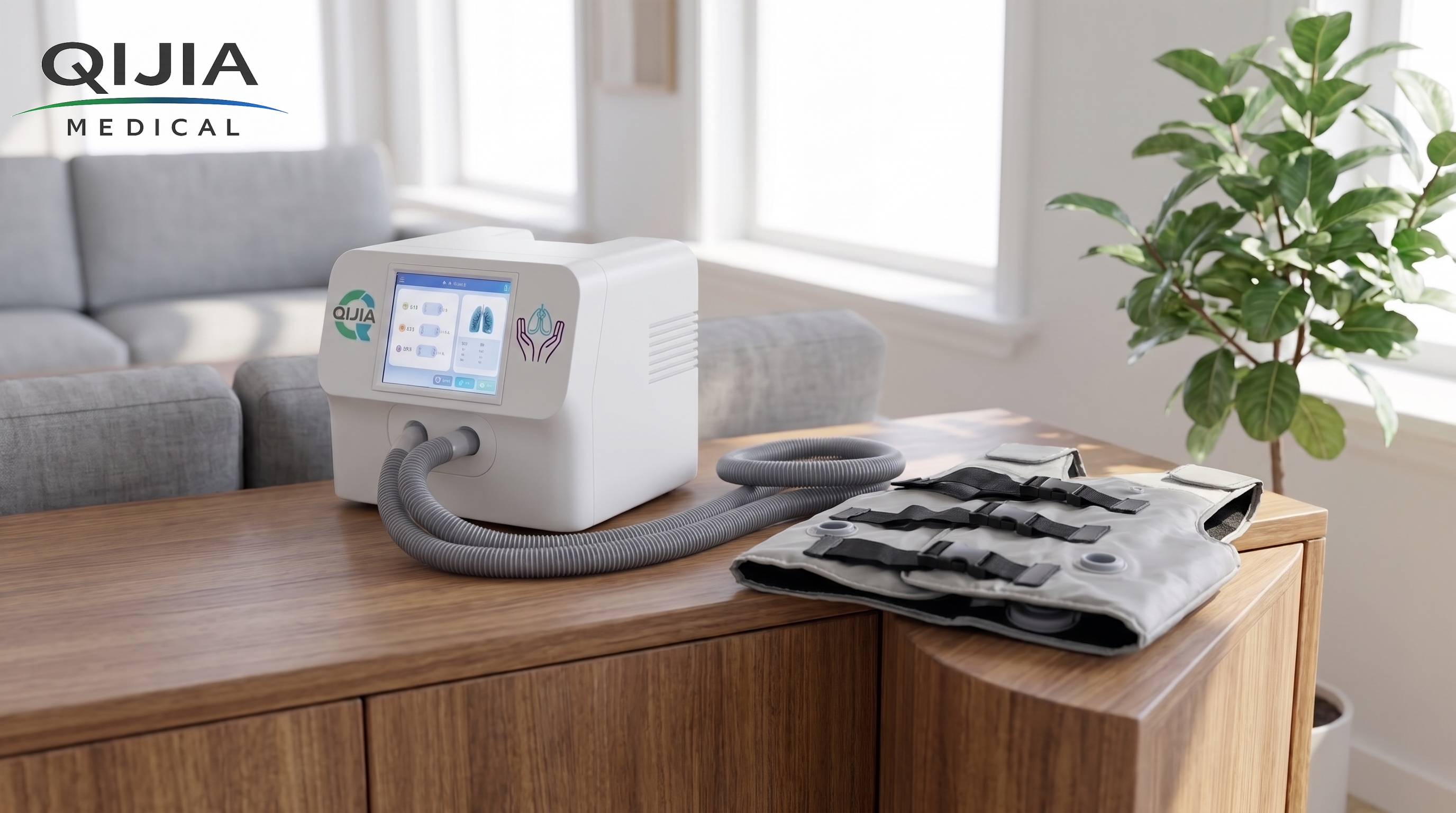
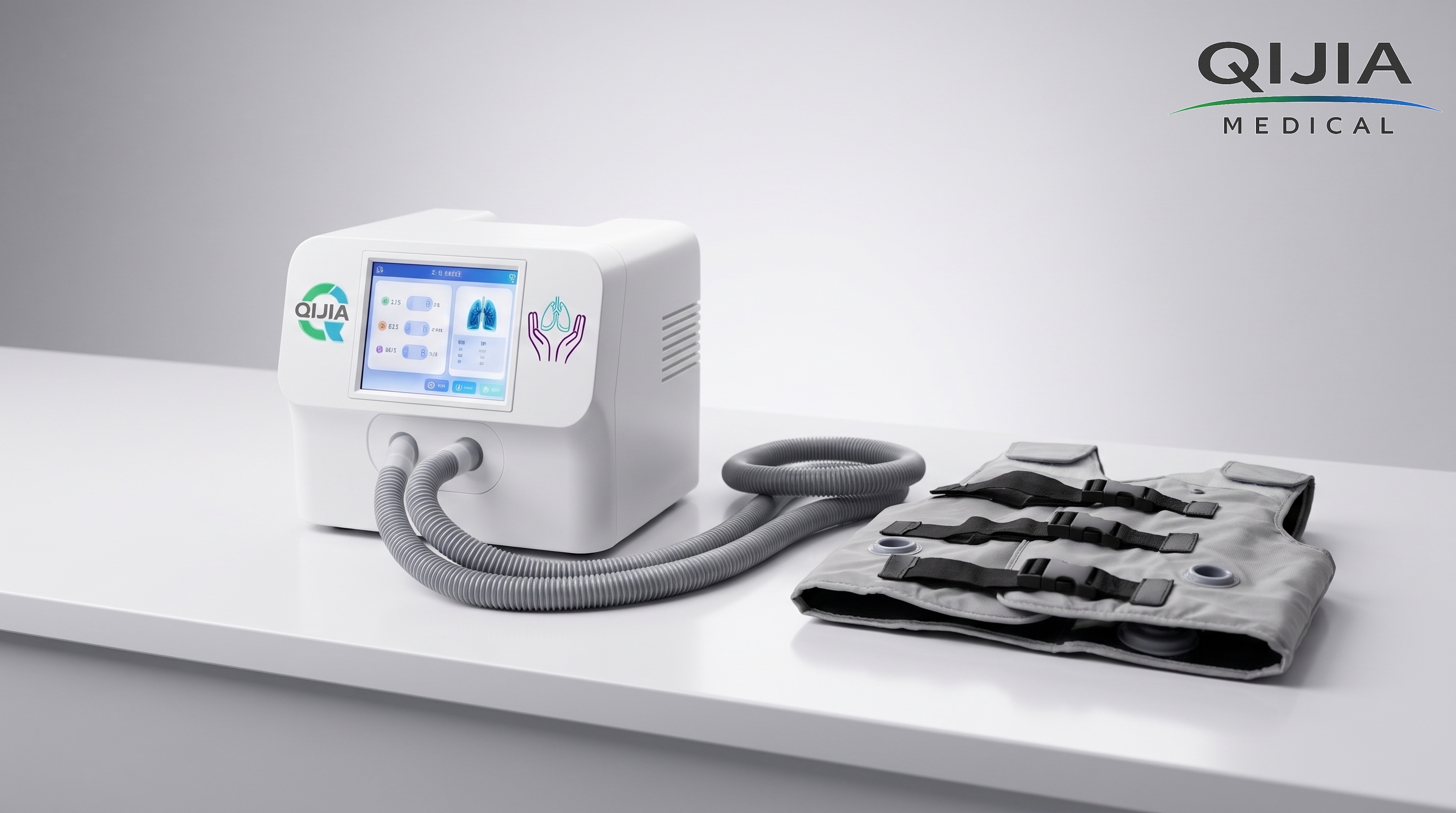
An HFCWO system generally consists of a control unit, an inflatable chest vest and connecting air hoses.
During treatment, the control unit rapidly delivers and releases air through the hoses, causing the vest to inflate and deflate repeatedly.
This alternating compression and release creates mechanical oscillations across the chest wall.
The resulting oscillatory forces are intended to influence airflow within the respiratory tract and help mobilize mucus from smaller airways toward larger airway passages.
Once the secretions have been mobilized, coughing, assisted coughing or suctioning may still be necessary to complete their removal.
Importantly, HFCWO does not directly restore damaged cilia, correct airway dehydration or independently eliminate mucus plugs. It provides an additional mechanical approach to secretion mobilization.
Introducing the QIJIA Airway Clearance System
For healthcare providers exploring HFCWO-based airway clearance technology, the QIJIA Airway Clearance System is designed to support secretion mobilization through high-frequency chest wall oscillation.
The system uses an inflatable vest connected to its control unit through two air hoses, with each connection delivering alternating inflation and deflation to the corresponding side of the vest.
By generating repeated chest wall compression and release, the system provides a non-invasive mechanical approach to supporting airway secretion clearance.
Its potential applications may be considered in respiratory care settings where additional secretion mobilization support is appropriate. Patient selection and treatment protocols should always be determined by qualified healthcare professionals.
For hospitals, respiratory therapy departments and other healthcare institutions, HFCWO technology represents one option within a broader airway clearance strategy.
6. Why Integrated Airway Clearance Matters
One important lesson from respiratory physiology is that mucus production, hydration, transportation and removal are closely interconnected.
Improving only one part of this process may not resolve every cause of secretion retention.
For example, appropriate humidification supports airway surface hydration, but it does not automatically restore an ineffective cough. Similarly, mechanical secretion mobilization does not guarantee that the patient can independently expel the mobilized mucus.
Effective airway management therefore requires consideration of the entire clearance pathway.
Healthcare professionals should evaluate secretion characteristics, respiratory function, cough effectiveness, airway protection and the patient's ability to tolerate different interventions.
In selected patients, combining appropriate respiratory care measures with mechanical airway clearance technology may provide additional support for secretion management.
7. Advancing Respiratory Care Through Medical Equipment Innovation
As the understanding of airway physiology continues to develop, medical equipment manufacturers play an important role in providing practical technologies for respiratory care.
QIJIA MEDICAL focuses on the research, development and manufacturing of medical equipment, including respiratory care and rehabilitation solutions.
Our Airway Clearance System reflects our commitment to HFCWO-based technology and the development of equipment designed for different healthcare environments.
With integrated manufacturing capabilities and OEM/ODM cooperation options, QIJIA works with international distributors, medical equipment suppliers and healthcare partners to explore product configurations and cooperation opportunities.
Learn more about QIJIA MEDICAL's manufacturing capabilities and OEM/ODM services, or contact our team to discuss product specifications, distribution opportunities and customized cooperation requirements.
Frequently Asked Questions (FAQ)
What is mucociliary clearance?
Mucociliary clearance is the natural airway defense mechanism in which cilia move mucus and trapped particles toward the upper respiratory tract. It helps protect the lungs from inhaled microorganisms, dust and other foreign substances.
What causes impaired mucociliary clearance?
Common contributing factors include respiratory inflammation, changes in mucus hydration, impaired ciliary function, artificial airways, mechanical ventilation and certain underlying respiratory diseases.
Why does thick mucus become difficult to remove?
When mucus becomes excessively concentrated, its physical properties change. It may become more adhesive and difficult for cilia to transport. Reduced cough strength can further limit the body's ability to expel accumulated secretions.
Can impaired mucociliary clearance lead to lung complications?
Yes. Persistent secretion retention may contribute to mucus plugging, airway obstruction, atelectasis and impaired ventilation. It can also increase respiratory infection concerns, particularly in patients with compromised airway defenses.
What is the difference between mucociliary clearance and HFCWO?
Mucociliary clearance is a natural biological process involving airway mucus and ciliary movement. HFCWO is an external mechanical technique that uses repeated chest wall oscillations to help mobilize airway secretions. They have different mechanisms but can be considered within a broader airway clearance strategy.
Does HFCWO restore the natural function of airway cilia?
No. HFCWO does not directly restore ciliary function or correct abnormalities in airway surface hydration. Its primary purpose is to provide mechanical assistance in mobilizing airway secretions.
Does HFCWO completely remove mucus from the lungs?
Not independently. HFCWO is designed to help mobilize secretions. Following mobilization, patients may still need to cough, receive assisted coughing or undergo suctioning, depending on their ability to clear the airway.
Can HFCWO be used in intensive care units?
HFCWO may be considered for selected critically ill patients when additional secretion mobilization support is appropriate. However, evidence regarding its effects on major ICU outcomes remains limited, and treatment decisions require individual clinical assessment.
References and Further Reading
Hill DB, Button B, Rubinstein M, Boucher RC. Physiology and Pathophysiology of Human Airway Mucus. Physiological Reviews. 2022;102(4):1757–1836. Read the research.
Roe T, et al. Physiology and pathophysiology of mucus and mucolytic use in critically ill patients. Critical Care. 2025;29:68. Read the full review.
Mucus Clearance Strategies in Mechanically Ventilated Patients. Frontiers in Physiology. 2022. Read the review.
High-Frequency Chest Wall Oscillation in Critical Care: A Systematic Review. 2026. Read the research.