







Parkinson’s Disease and Freezing of Gait: Can TMS Support Motor Rehabilitation?
Parkinson’s disease is a progressive neurological disorder that affects movement, coordination, and balance. While tremors and muscle stiffness are widely recognized symptoms, one of its most challenging complications is freezing of gait (FOG) — a sudden and temporary inability to initiate or continue walking.
For many people living with Parkinson’s disease, walking can become increasingly unpredictable. A patient may suddenly feel that their feet are stuck to the floor when attempting to start walking, turn around, pass through a narrow doorway, or navigate a crowded environment.
These episodes are more than a mobility inconvenience. They can significantly increase the risk of falls, physical injuries, loss of independence, and psychological distress. As conventional treatment approaches do not always adequately control freezing of gait, researchers are exploring additional rehabilitation strategies, including repetitive transcranial magnetic stimulation (rTMS).
Recent clinical research into high-frequency rTMS targeting the supplementary motor area (SMA) has provided encouraging findings, opening another area of investigation in neurological rehabilitation.
1. Understanding Freezing of Gait in Parkinson’s Disease
Freezing of gait is a distinctive motor complication associated with Parkinson’s disease. It is generally described as a brief episode during which a person experiences difficulty initiating movement or temporarily loses the ability to produce effective steps despite the intention to walk.
Unlike ordinary walking difficulties caused by muscle weakness or fatigue, freezing episodes can occur suddenly and unpredictably.
Common situations that trigger freezing include:
Starting to walk after standing still.
Turning around or changing walking direction.
Passing through narrow spaces or doorways.
Walking in crowded or visually complex environments.
Performing two tasks simultaneously, such as walking while talking.
Parkinson’s disease affects neural circuits responsible for planning, initiating, and coordinating movement. Changes in communication between the basal ganglia, supplementary motor area, and other cortical networks can interfere with the smooth execution of walking.
As the disease progresses, these disruptions may make gait increasingly difficult to control, particularly during complex movements and transitional actions.
2. Why Freezing of Gait Can Become a Serious Health Risk
One of the most concerning aspects of Parkinson’s-related freezing is its unpredictable nature. A patient may walk relatively normally for several minutes and then suddenly experience a movement block while turning or approaching an obstacle.
Increased Risk of Falls and Physical Injuries
When a freezing episode occurs, patients may struggle to maintain their balance or recover their normal walking pattern. Attempting to force movement during an episode can further destabilize posture.
Repeated falls can result in fractures, head injuries, bruising, and other complications. For older adults, a serious fall may lead to hospitalization, prolonged immobility, and a substantial reduction in functional independence.
Progressive Loss of Mobility and Independence
Frequent freezing episodes can make everyday activities increasingly difficult. Walking to the bathroom, moving between rooms, shopping, and participating in social activities may require additional assistance.
As mobility becomes less predictable, patients may gradually reduce their physical activity. This can contribute to muscle deconditioning, reduced exercise tolerance, and further difficulties with balance and functional movement.
Psychological Stress and Reduced Quality of Life
The fear of suddenly becoming unable to move can create considerable anxiety. Some patients begin avoiding unfamiliar environments, crowded spaces, or activities that previously formed part of their daily routine.
This loss of confidence may contribute to social isolation, reduced participation in rehabilitation, and a lower overall quality of life.
Therefore, managing freezing of gait is not simply about improving walking speed. It also involves protecting patient safety, maintaining functional mobility, and supporting long-term independence.
3. Why Conventional Parkinson’s Treatments May Not Fully Resolve Freezing
Dopaminergic medication, particularly levodopa, remains an important component of Parkinson’s disease management. It can improve several motor symptoms by addressing dopamine-related dysfunction in the brain.
However, freezing of gait does not always respond consistently to medication. Some patients continue to experience freezing even when other motor symptoms are relatively well controlled.
In addition, the relationship between freezing episodes and medication timing can vary. Some patients experience freezing when medication effects decrease, while others may experience episodes during medication ON periods.
Rehabilitation strategies such as gait training, external visual or auditory cues, balance exercises, and movement-planning techniques can also help patients manage mobility difficulties.
Nevertheless, persistent freezing remains a challenging clinical problem. This has encouraged researchers to investigate treatment approaches that target the neural networks involved in movement preparation and execution.
4. How TMS May Support Motor Rehabilitation in Parkinson’s Disease
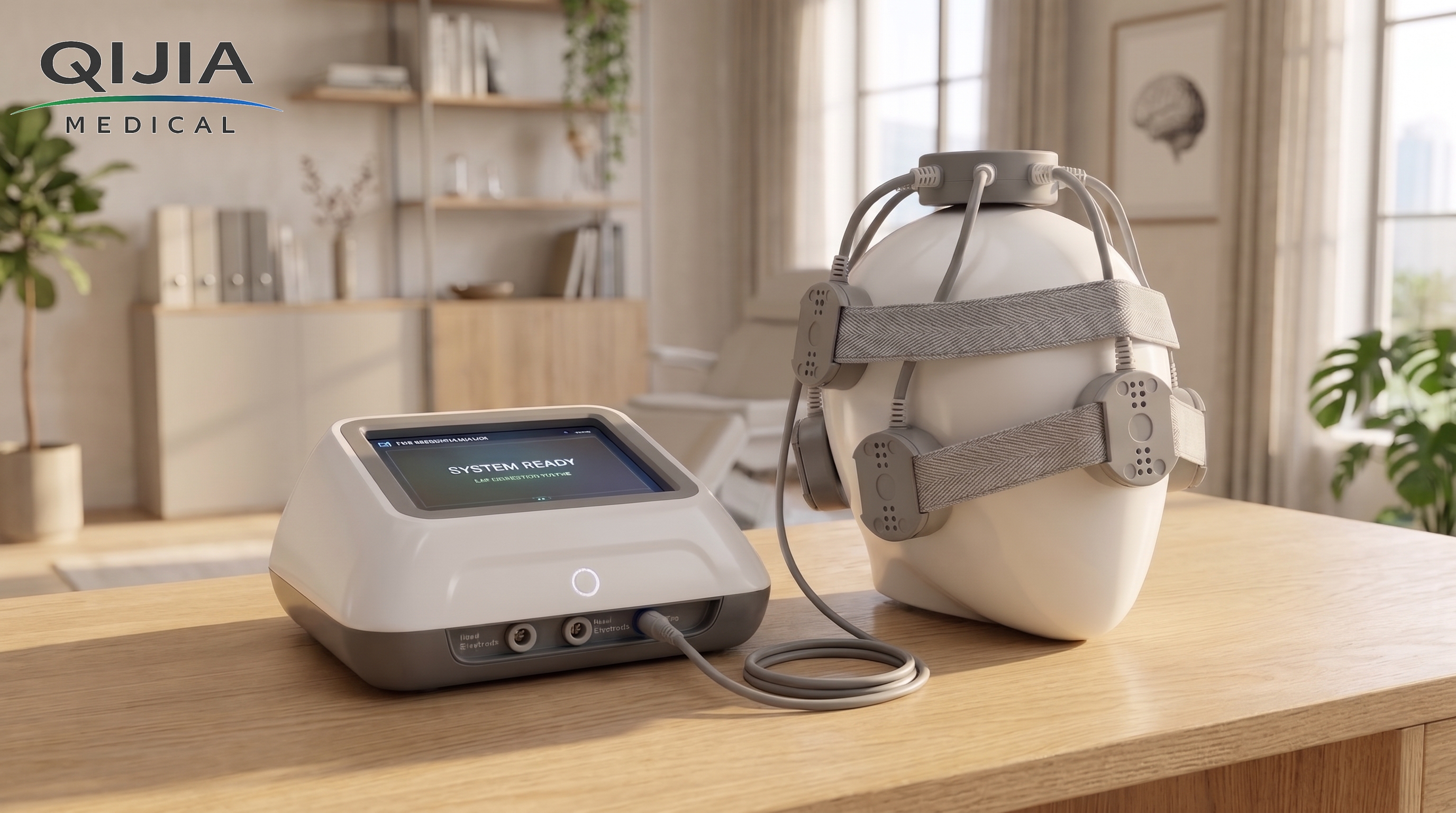
Transcranial Magnetic Stimulation (TMS) is a non-invasive neuromodulation technology that uses magnetic pulses to influence neuronal activity in targeted areas of the brain.
Repetitive transcranial magnetic stimulation (rTMS) delivers a series of magnetic pulses according to a predefined stimulation protocol. Depending on the stimulation frequency, intensity, target area, and treatment schedule, rTMS may influence cortical excitability and communication between different brain regions.
In Parkinson’s disease research, particular attention has been given to brain regions involved in motor planning and movement coordination.
The Role of the Supplementary Motor Area (SMA)
The supplementary motor area plays an important role in preparing and initiating voluntary movements. It contributes to movement sequencing, anticipatory postural adjustments, and the coordination of complex motor actions.
When neural processing within motor-related networks becomes impaired, patients may experience difficulties initiating steps, transitioning between movements, or adapting their gait to changing environmental conditions.
Researchers have therefore investigated whether high-frequency rTMS targeting the SMA could help modulate these neural circuits and improve certain aspects of gait function.
Why High-Frequency rTMS Is Being Investigated
High-frequency rTMS is commonly investigated for its potential to increase cortical excitability, although its physiological effects depend on the stimulation protocol and individual characteristics.
By delivering repeated magnetic stimulation to a selected cortical region, researchers aim to influence neural activity and potentially facilitate functional changes within interconnected brain networks.
For Parkinson’s-related freezing of gait, the objective is not simply to stimulate a single brain region. It is to investigate whether modulation of motor-related networks can improve the brain’s ability to organize and execute walking movements.
5. Clinical Research: High-Frequency SMA-rTMS and Freezing of Gait
A particularly relevant clinical study published in the Journal of Neurology in November 2026 investigated the effects of high-frequency rTMS targeting the supplementary motor area in patients with Parkinson’s disease and freezing of gait.
The randomized, double-blind, sham-controlled study included 52 patients who were assigned to receive either active stimulation or sham stimulation.
Key Study Findings
Participants: 52 patients with Parkinson’s disease and freezing of gait were randomized into two groups.
Stimulation target: The supplementary motor area (SMA).
Stimulation frequency: 10 Hz high-frequency rTMS.
Treatment schedule: 12 sessions over four weeks, with three sessions per week.
Primary outcome: Changes in the New Freezing of Gait Questionnaire (NFOG-Q).
In the modified intention-to-treat analysis, 50 participants were included. After four weeks, the active stimulation group demonstrated a greater reduction in freezing of gait scores than the sham group.
The between-group difference in NFOG-Q score change was 2.36 points in favor of active stimulation (95% confidence interval: 1.25–3.47 points in the direction of improvement, p < 0.001).
The difference remained statistically significant at the four-week follow-up assessment.
Changes in Motor Function and Gait Performance
The researchers also observed improvements in several secondary outcomes, including motor function, balance, step length, and stride velocity.
These findings suggest that the potential effects of rTMS may extend beyond patients' subjective experience of freezing episodes and could involve measurable changes in gait performance.
What Did Brain Imaging Reveal?
One particularly interesting aspect of this research was its investigation of functional brain connectivity.
During motor imagery tasks involving challenging walking situations, including turning around and navigating narrow spaces, functional MRI revealed enhanced connectivity between the supplementary motor area and parietal brain regions following active stimulation.
This finding provides a possible explanation for how rTMS may influence movement-related neural networks. Rather than focusing exclusively on isolated brain activity, the research highlights the importance of communication between interconnected regions involved in movement planning and execution.
However, this remains an emerging research area. The trial involved a relatively small sample, and its follow-up period was limited. Larger studies are necessary to establish long-term benefits, optimal treatment protocols, and which patients are most likely to respond.
6. TMS as Part of a Broader Neurological Rehabilitation Strategy
Parkinson’s disease is a complex neurological condition that requires an individualized and multidisciplinary management approach.
While medication remains essential for many patients, neurological rehabilitation increasingly considers complementary approaches that address different aspects of motor dysfunction.
Depending on the patient's clinical condition, a comprehensive rehabilitation program may incorporate:
Neurological assessment and medication management.
Gait and balance training.
Movement initiation and coordination exercises.
Functional mobility training.
Non-invasive brain stimulation where clinically appropriate.
Within this framework, TMS represents a technology of interest for researchers, rehabilitation specialists, and healthcare institutions exploring neuromodulation-based approaches.
Its potential value lies in providing a non-invasive method of influencing brain activity without requiring surgical implantation. When appropriately selected and supervised, it may serve as an additional component of a broader rehabilitation strategy.
Importantly, TMS should not be considered a replacement for Parkinson’s medication, established rehabilitation programs, or fall-prevention measures. The treatment protocol must be determined by qualified healthcare professionals according to the patient's clinical profile and applicable medical guidelines.
7. Safety Considerations Before TMS Treatment
Although TMS is generally considered a non-invasive neuromodulation technique, it is not suitable for every patient and should not be regarded as risk-free.
Before treatment, healthcare professionals should conduct an appropriate medical assessment and review the patient's medical history, neurological condition, implanted devices, and potential contraindications.
Potential Side Effects
Commonly reported side effects of TMS include:
Temporary scalp discomfort or pain at the stimulation site.
Headache following treatment.
Facial muscle twitching during stimulation.
Temporary discomfort related to repeated magnetic pulses.
Seizures are a rare but potentially serious adverse event associated with TMS. Risk assessment is particularly important when selecting stimulation parameters and treating individuals with relevant neurological or medical risk factors.
Important Screening Considerations
Patients with certain implanted electronic devices, metallic implants near the stimulation site, or a history of seizures require careful evaluation before treatment. Specific device-related contraindications depend on the implant type, location, and manufacturer's safety information.
Hearing protection should also be used during stimulation because TMS produces repeated acoustic pulses.
For patients with Parkinson’s disease, additional attention should be given to postural instability, cognitive status, medication fluctuations, and fall risk.
Clinical teams should monitor patients throughout treatment and integrate appropriate mobility and fall-prevention measures into the rehabilitation plan.
8. Exploring TMS Technology for Rehabilitation Institutions
As research into neuromodulation continues to develop, medical institutions and rehabilitation centers are showing increasing interest in technologies that support neurological rehabilitation and non-invasive brain stimulation.
For healthcare providers evaluating TMS equipment, important considerations include stimulation performance, treatment parameter configuration, operational safety, equipment reliability, and suitability for the intended clinical application.
QIJIA MEDICAL focuses on the research, development, and manufacturing of medical rehabilitation equipment, including transcranial magnetic stimulation systems.
As a medical equipment manufacturer integrating R&D and production, QIJIA MEDICAL provides equipment solutions for international healthcare markets, with OEM and ODM customization services available for qualified business partners and distributors.
Our TMS product range is designed for professional medical and rehabilitation equipment markets. Healthcare institutions and distributors can explore the available equipment models, discuss technical requirements, and evaluate suitable product configurations with our team.
Learn more about our Transcranial Magnetic Stimulation (TMS) equipment.
For information about our manufacturing capabilities, product development, and customized solutions, visit About QIJIA MEDICAL.
We welcome inquiries from medical equipment distributors, rehabilitation centers, healthcare institutions, and regional partners interested in OEM/ODM cooperation.
9. Looking Ahead: The Future of Non-Invasive Neuromodulation
Parkinson’s disease continues to present significant challenges for patients, caregivers, and healthcare professionals. Freezing of gait is particularly concerning because it directly affects mobility, personal safety, and the ability to maintain an independent lifestyle.
Emerging research into high-frequency rTMS suggests that targeted neuromodulation may offer new opportunities for addressing specific motor complications associated with Parkinson’s disease.
Although further clinical validation is required, studies investigating the supplementary motor area and its connections with other brain regions are helping researchers better understand the neurological mechanisms underlying gait dysfunction.
For the medical rehabilitation industry, these developments also highlight the growing importance of non-invasive neuromodulation technologies and the need for reliable, adaptable medical equipment solutions.
Continued collaboration between clinical researchers, rehabilitation professionals, and medical device manufacturers will be important in translating scientific findings into practical healthcare applications.
Frequently Asked Questions (FAQ)
1. Can TMS help patients with Parkinson’s disease?
Research suggests that repetitive transcranial magnetic stimulation may improve certain motor symptoms in some patients with Parkinson’s disease. However, its effectiveness depends on the stimulation protocol, target brain region, and individual clinical characteristics. It is not a cure for Parkinson’s disease.
2. What is freezing of gait in Parkinson’s disease?
Freezing of gait is a motor complication in which patients temporarily experience difficulty initiating or continuing walking. It commonly occurs when starting to walk, turning, passing through narrow spaces, or navigating complex environments.
3. How does high-frequency rTMS work?
High-frequency rTMS delivers repeated magnetic pulses to targeted brain regions. It may influence cortical excitability and functional communication between interconnected neural networks involved in movement planning and execution.
4. Why is the supplementary motor area important in Parkinson’s rehabilitation?
The supplementary motor area contributes to movement preparation, initiation, and coordination. Researchers are investigating whether stimulating this region can help improve gait-related dysfunction, including freezing episodes.
5. Is TMS treatment safe for older patients with Parkinson’s disease?
TMS is generally well tolerated when appropriately administered, but older patients require individualized screening. Medical professionals should evaluate seizure risk, implanted devices, medical history, and other relevant contraindications before treatment.
6. Can TMS replace medication for Parkinson’s disease?
No. TMS should not replace prescribed Parkinson’s medication or established medical care. It is being investigated as a potential complementary intervention within a broader neurological rehabilitation program.
7. Can rehabilitation centers and distributors purchase TMS equipment from QIJIA MEDICAL?
Yes. QIJIA MEDICAL supplies TMS equipment and supports international medical equipment distributors and institutional partners. OEM and ODM customization services are also available. Interested customers can contact our team to discuss product specifications and cooperation requirements.
References and Further Reading
Liu C, et al. (2026). Efficacy and mechanisms of supplementary motor area rTMS for freezing of gait in Parkinson’s disease: a randomized sham-controlled trial. Journal of Neurology, 273, Article 730.https://doi.org/10.1007/s00415-026-14262-6
Tosserams A, et al. (2025). Management of freezing of gait – mechanism-based practical recommendations. Nature Reviews Neurology, 21, 327–344.https://doi.org/10.1038/s41582-025-01079-6
The Effects of Repetitive Transcranial Magnetic Stimulation on Gait, Motor Function, and Balance in Parkinson's Disease: A Systematic Review and Meta-Analysis of Randomized Controlled Trials.PubMed.View research on PubMed
Medical Disclaimer: This article is intended for educational and informational purposes only. TMS is not a cure for Parkinson’s disease, and research findings should not be interpreted as a guarantee of clinical benefit. Treatment decisions should be made by qualified healthcare professionals based on individual assessment and current clinical evidence.