







Airway Clearance System: Who May Benefit and What Conditions Is It Used For?
Effective airway clearance is an important part of respiratory care. While coughing normally helps remove mucus and respiratory secretions from the airways, some patients may have difficulty clearing secretions because of weak cough, reduced mobility, neuromuscular weakness, or chronic respiratory conditions.
For these patients, an Airway Clearance System can be used as part of a professional respiratory care and rehabilitation program. One commonly used technology is High-Frequency Chest Wall Oscillation (HFCWO), which applies controlled oscillations to the chest wall to help mobilize airway secretions.
This article explains who may benefit from airway clearance support, which patient groups are commonly considered, and how HFCWO technology fits into respiratory care.
What Is an Airway Clearance System?
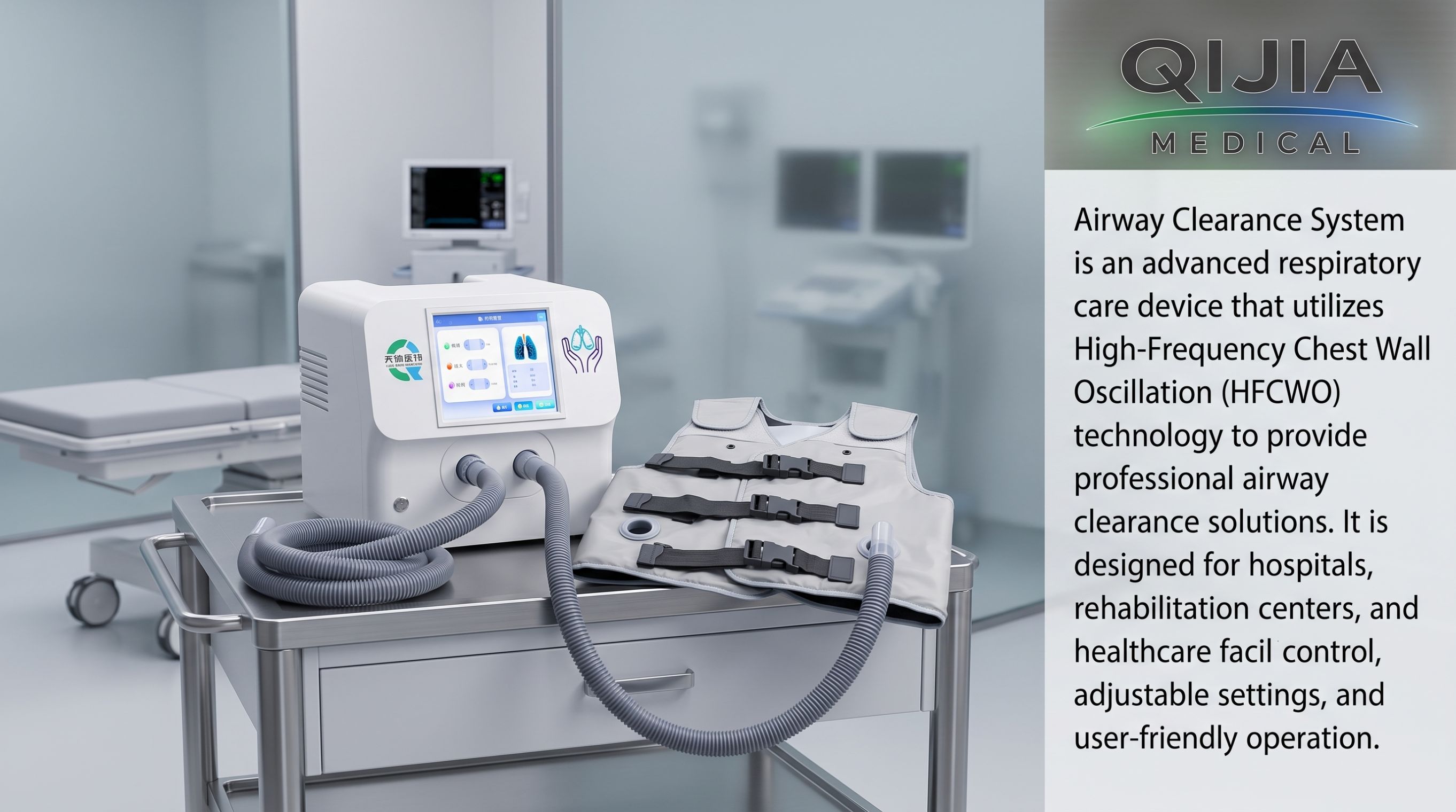
An Airway Clearance System is a medical device designed to support the mobilization and removal of respiratory secretions from the airways. It is particularly relevant for patients who have difficulty clearing mucus through normal coughing.
One widely used approach is High-Frequency Chest Wall Oscillation (HFCWO). During HFCWO therapy, a wearable garment is connected to a pneumatic device that produces controlled, repeated pressure changes around the chest.
These chest wall oscillations can help loosen and mobilize mucus, allowing secretions to move toward the larger airways where they may be easier to clear through coughing or other airway clearance techniques.
It is important to understand that an HFCWO Airway Clearance System is not a ventilator and does not replace spontaneous breathing. Its primary purpose is to support airway secretion management.
Why Is Airway Clearance Important?
The respiratory system continuously produces mucus that helps protect the airways. Normally, mucus is transported through the respiratory tract and removed through coughing and other natural mechanisms.
However, when a person's cough is weak or physical mobility is significantly reduced, respiratory secretions may become more difficult to clear.
Difficulty clearing secretions may occur in several situations, including:
Weak cough or reduced cough effectiveness
Limited physical mobility
Long-term bed rest
Neuromuscular weakness
Chronic respiratory conditions associated with excessive secretions
Some neurological or rehabilitation conditions
Patients requiring long-term respiratory care
For appropriately selected patients, airway clearance techniques may form part of a broader respiratory management and rehabilitation program.
Who May Benefit From an Airway Clearance System?
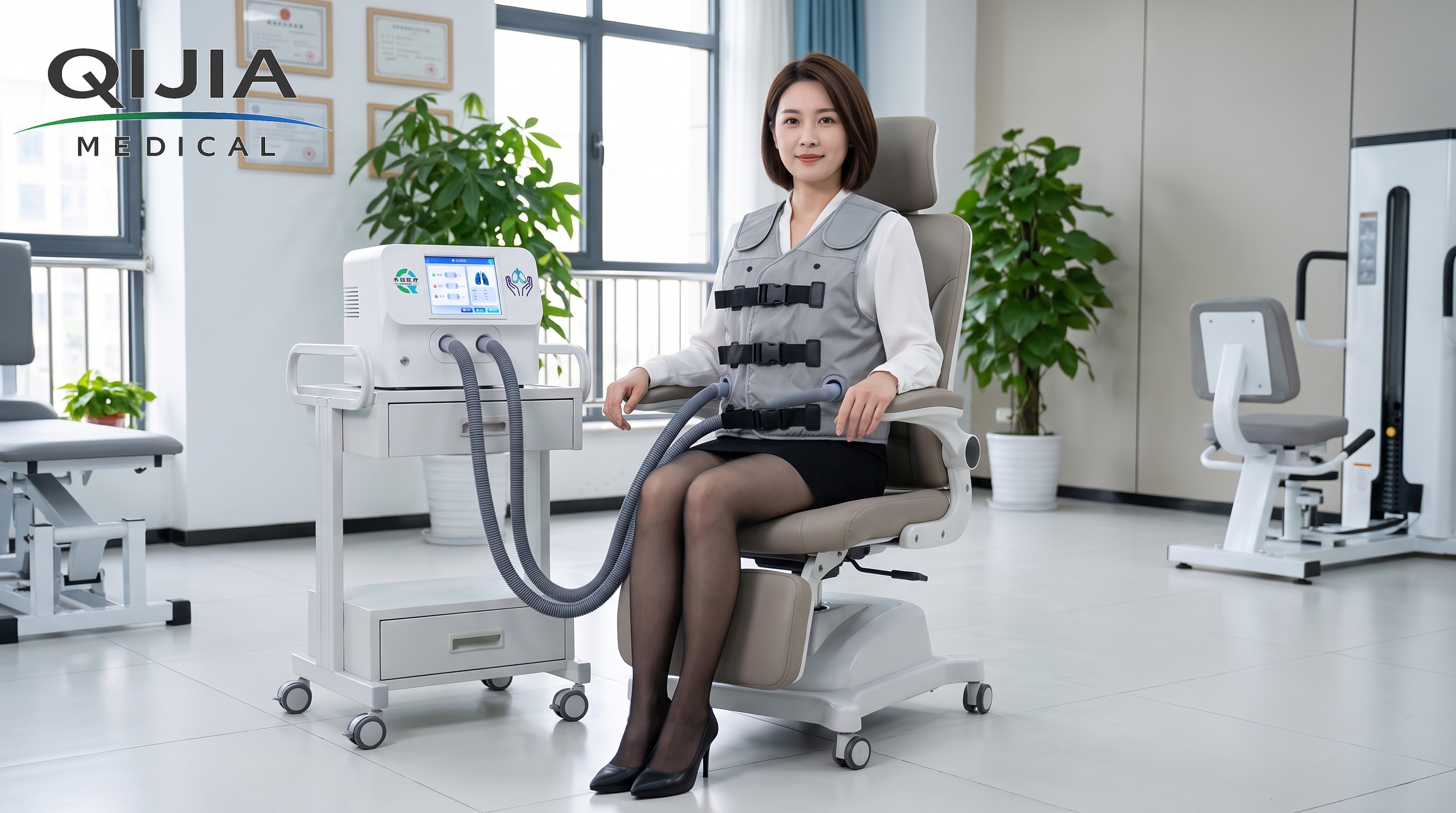
1. Elderly Patients With Limited Mobility
Older adults may experience reduced muscle strength, lower physical activity levels, and decreased cough effectiveness. Patients who spend extended periods in bed or in a chair may also have difficulty mobilizing respiratory secretions.
For appropriately assessed patients, airway clearance support may be incorporated into respiratory care or rehabilitation to help mobilize retained secretions.
2. Children With Difficulty Clearing Respiratory Secretions
Some children may have difficulty clearing mucus because of neurological conditions, neuromuscular weakness, chronic respiratory conditions, or reduced ability to produce an effective cough.
In selected pediatric patients, airway clearance techniques may be included in a professional respiratory care plan. The appropriate technique and treatment parameters should be determined according to the child's age, physical condition, diagnosis, and clinical assessment.
3. Patients With Neuromuscular Weakness
Neuromuscular weakness can affect the muscles involved in breathing and coughing. A patient may be able to breathe independently but still have difficulty generating enough cough force to effectively clear airway secretions.
This distinction is important. Difficulty coughing does not necessarily mean a patient cannot breathe independently. In such cases, airway clearance support may be considered as part of comprehensive respiratory management.
Patients with certain neuromuscular or neurological conditions may therefore require regular airway clearance strategies based on their individual clinical needs.
4. Patients With Limited Mobility or Long-Term Bed Rest
Physical movement contributes to normal secretion mobilization. Patients who are bedridden or have significantly reduced mobility may have greater difficulty clearing respiratory secretions.
This may include some patients in rehabilitation centers, long-term care facilities, postoperative recovery programs, or other healthcare environments where mobility is temporarily or permanently restricted.
For these patients, airway clearance may be considered alongside positioning, respiratory exercises, coughing techniques, and other appropriate respiratory interventions.
5. Patients With Chronic Respiratory Conditions
Some chronic respiratory conditions can be associated with increased mucus production or difficulty clearing respiratory secretions. Examples may include conditions such as bronchiectasis and cystic fibrosis, as well as other respiratory disorders where secretion management is clinically relevant.
Depending on the individual condition, healthcare professionals may recommend airway clearance techniques as part of an overall respiratory care program.
Airway Clearance and Weak Cough: What Is the Connection?
A strong and effective cough is one of the body's natural mechanisms for clearing airway secretions. When cough strength is reduced, mucus may be more difficult to move out of the respiratory tract.
This can occur in people with:
Neuromuscular weakness
Neurological impairment
Reduced physical strength
Advanced age
Limited mobility
Certain chronic respiratory conditions
An Airway Clearance System does not directly create a normal cough. Instead, HFCWO technology is designed to help mobilize respiratory secretions, which may make subsequent secretion clearance easier when combined with appropriate coughing and other airway clearance techniques.
How Does HFCWO Support Airway Clearance?
High-Frequency Chest Wall Oscillation uses repeated pneumatic pressure changes to produce controlled oscillations around the patient's chest.
The basic process can be summarized as follows:
The patient wears a suitable inflatable chest garment.
The garment is connected to the HFCWO device.
The device generates controlled high-frequency pressure oscillations.
The oscillations are transmitted through the chest wall.
Respiratory secretions are mobilized within the airways.
The patient can then use coughing or other clinically appropriate techniques to help clear the mobilized secretions.
The exact treatment parameters should be selected according to the patient's condition and the healthcare professional's assessment.
Airway Clearance System in Hospitals and Rehabilitation Centers
Airway clearance is relevant across different healthcare environments. Hospitals may use airway clearance technologies as part of respiratory care, while rehabilitation centers and long-term care facilities may incorporate them into broader rehabilitation programs for appropriately selected patients.
Common professional application environments may include:
Hospitals
Rehabilitation centers
Respiratory care centers
Long-term care facilities
Nursing facilities
Specialized pediatric care settings
Home respiratory care programs under professional guidance
For healthcare providers evaluating equipment, factors such as patient population, treatment requirements, device control, garment options, ease of operation, and after-sales support should be considered.
Airway Clearance System vs. Cough Assist Device
Airway Clearance Systems and Cough Assist Devices are sometimes discussed together because both can support patients who have difficulty clearing respiratory secretions. However, they use different approaches.
An HFCWO Airway Clearance System primarily uses controlled chest wall oscillations to help mobilize respiratory secretions.
A Cough Assist Device, also known as a Mechanical Insufflation-Exsufflation (MIE) device, uses positive and negative pressure changes to simulate a cough and assist with secretion clearance.
In some clinical situations, these technologies may be used as complementary approaches. The appropriate method depends on the patient's condition, cough effectiveness, secretion characteristics, and clinical requirements.
Is an Airway Clearance System Suitable for Patients Who Cannot Breathe Independently?
This is an important distinction. An Airway Clearance System is primarily designed for airway secretion mobilization, not for providing ventilation or replacing spontaneous breathing.
Patients who cannot breathe independently may require ventilatory or other respiratory support depending on their clinical condition. HFCWO should not be considered a substitute for mechanical ventilation.
For patients who can breathe but have difficulty clearing respiratory secretions, an Airway Clearance System may be considered as part of an appropriate respiratory care plan.
Key Factors When Selecting an Airway Clearance System
Healthcare facilities and medical equipment distributors should consider several factors when evaluating an Airway Clearance System.
Patient Population
Consider whether the equipment will primarily be used for adults, elderly patients, pediatric patients, or mixed patient populations.
Control and Treatment Settings
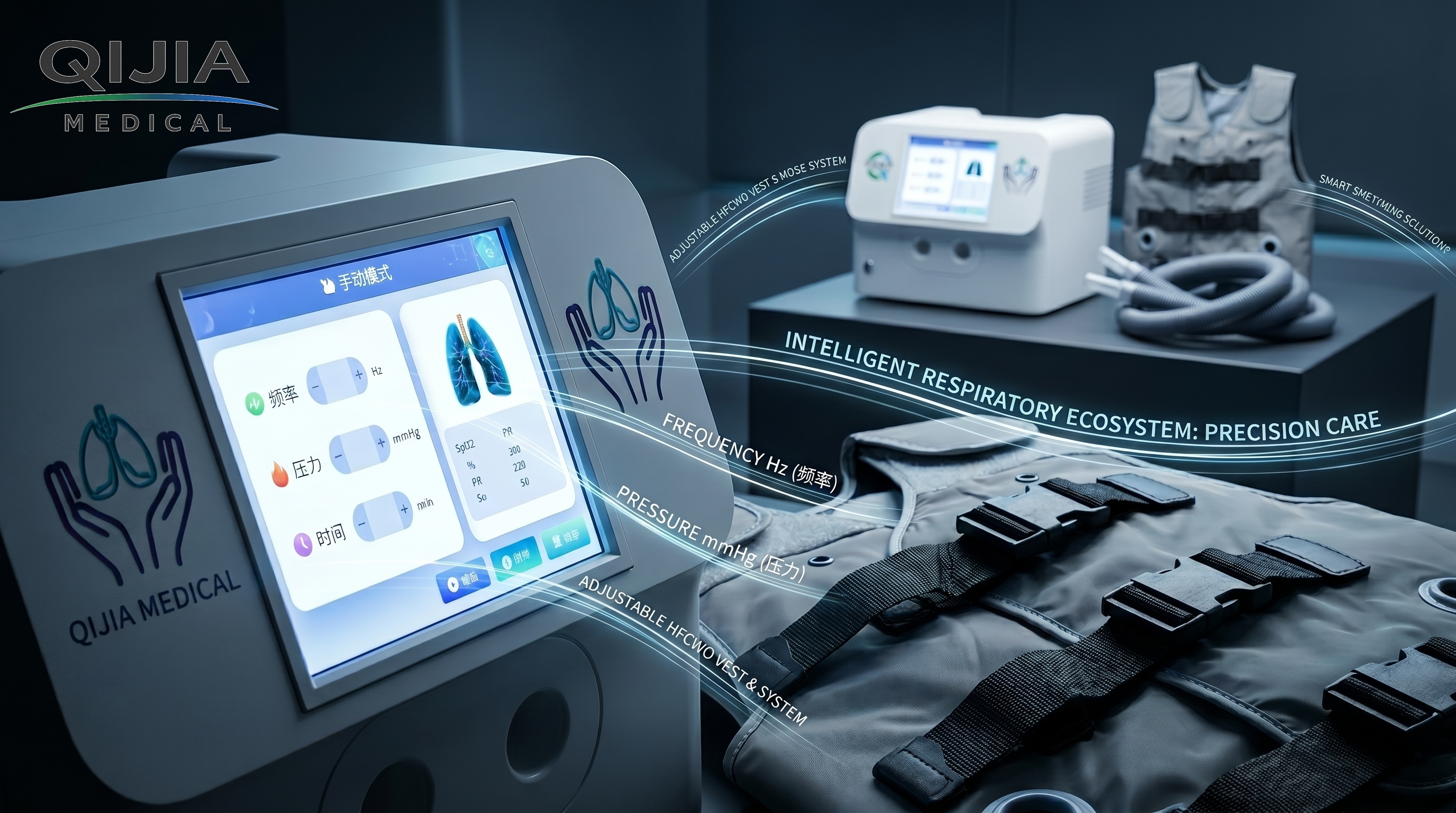
Adjustable treatment parameters can help healthcare professionals select appropriate therapy settings based on individual patient requirements.
Garment Options
Different patient sizes and body types may require different garment configurations. Appropriate fitting is important for effective and comfortable use.
Ease of Operation
Simple controls and clear operating procedures can help healthcare professionals integrate the system into routine respiratory care.
Manufacturer Support
For hospitals, distributors, and healthcare organizations, technical support, training, spare parts, documentation, and after-sales service can be important factors when selecting a long-term medical equipment partner.
QIJIA MEDICAL Airway Clearance System
QIJIA MEDICAL provides an Airway Clearance System based on High-Frequency Chest Wall Oscillation (HFCWO) technology for professional respiratory care and airway secretion management.
The system is designed for use in healthcare and rehabilitation environments where airway clearance support may be required. It can be considered for appropriate patients with difficulty mobilizing and clearing respiratory secretions.
For detailed product specifications, configurations, and application information, visit our Airway Clearance System product page.
OEM and ODM Airway Clearance System Solutions
Medical device distributors and healthcare equipment companies may have different requirements for product configuration, branding, packaging, market positioning, and technical specifications.
QIJIA MEDICAL integrates research and development with manufacturing and supports OEM and ODM cooperation for qualified international partners.
To learn more about our manufacturing capabilities and OEM/ODM services, visit our About Us page.
Conclusion
An Airway Clearance System can be an important respiratory care tool for appropriately selected patients who have difficulty clearing airway secretions.
Elderly people with limited mobility, children with secretion clearance difficulties, patients with neuromuscular weakness, long-term bedridden patients, and individuals with certain chronic respiratory conditions may benefit from professional airway clearance strategies.
HFCWO technology focuses on mobilizing respiratory secretions rather than replacing spontaneous breathing. For this reason, it is important to distinguish airway clearance support from ventilatory support.
The most appropriate airway clearance method depends on the patient's individual condition and should be determined by qualified healthcare professionals.
If you are looking for an Airway Clearance System manufacturer, OEM/ODM partner, or medical equipment supplier, you can contact QIJIA MEDICAL for product information, technical specifications, and cooperation opportunities.
Frequently Asked Questions
What is an Airway Clearance System?
An Airway Clearance System is a medical device designed to help mobilize and clear respiratory secretions. HFCWO systems use controlled chest wall oscillations to support secretion mobilization.
Who may use an HFCWO Airway Clearance System?
Depending on clinical assessment, it may be considered for elderly patients, children, patients with neuromuscular weakness, limited mobility, chronic respiratory conditions, or difficulty clearing respiratory secretions.
Does HFCWO help with coughing?
HFCWO primarily helps mobilize respiratory secretions. It does not directly replace a cough, but mobilized secretions may be easier to clear through coughing or other appropriate airway clearance techniques.
Is HFCWO the same as a Cough Assist Device?
No. HFCWO uses chest wall oscillations to mobilize secretions, while a Cough Assist Device uses mechanical insufflation and exsufflation to assist with cough and secretion clearance.
Can children use an Airway Clearance System?
Some pediatric patients may be considered for airway clearance therapy. However, suitability, treatment settings, and equipment selection should be determined by an appropriate healthcare professional based on the child's individual condition.
Does an Airway Clearance System replace a ventilator?
No. An HFCWO Airway Clearance System is designed for airway secretion management and does not provide ventilatory support or replace mechanical ventilation.