






Hand Rehabilitation After Stroke: Why Finger Training Matters and How Pneumatic Rehabilitation Systems Can Help
Stroke can affect movement, coordination, muscle control, and the ability to use one side of the body. For many stroke survivors, the hand and fingers can remain difficult to control even when some larger movements begin to improve.
Hand rehabilitation after stroke focuses on practicing meaningful movements and improving the patient's ability to use the affected hand in daily activities. Repetitive and task-oriented training can be an important part of a broader rehabilitation program, while the specific exercises and intensity should be adapted to each patient's condition and rehabilitation goals.
Why Does a Stroke Affect Hand and Finger Movement?
A stroke occurs when the blood supply to part of the brain is interrupted or when bleeding occurs in the brain. Because different areas of the brain are responsible for movement, sensation, coordination, and other functions, a stroke can result in different types of physical impairment.
When areas involved in upper-limb motor control are affected, a person may experience weakness, reduced coordination, changes in muscle tone, or difficulty performing voluntary movements.
Hand and finger movements can therefore become difficult to perform accurately. Common challenges may include:
Difficulty opening or closing the hand
Reduced finger movement
Difficulty grasping and releasing objects
Reduced hand and finger coordination
Difficulty controlling individual fingers
Limited ability to use the affected hand during daily activities
These limitations can affect simple tasks such as holding a cup, using a mobile phone, writing, buttoning clothes, eating, or picking up small objects.
Why Is Hand Rehabilitation Important After Stroke?
Stroke rehabilitation is not limited to walking or large body movements. Upper-limb and hand rehabilitation can also be important because hand function is closely connected with independence in everyday activities.
The 2026 American Heart Association/American Stroke Association guideline emphasizes multidisciplinary rehabilitation, individualized treatment, sufficient task practice, and periodic reassessment throughout stroke recovery.
Effective stroke rehabilitation should be adapted to the individual's functional limitations, goals, stage of recovery, and response to training. There is no single rehabilitation approach that is appropriate for every stroke survivor.
For patients with hand impairment, rehabilitation may include different forms of movement practice designed to address specific functional problems.
Common Goals of Post-Stroke Hand Rehabilitation
Practice voluntary hand movement
Improve finger opening and closing
Practice grasping and releasing
Improve finger coordination
Increase opportunities for repetitive movement practice
Support the use of the affected hand during functional activities
Why Is Individual Finger Training Important?
The human hand is capable of highly precise movements. Although many activities involve the whole hand, other tasks require individual fingers to move in a coordinated way.
For example, using a keyboard, pressing a button, holding a pen, picking up a small object, or manipulating a mobile phone can require specific finger movements rather than simply closing the entire hand.
For this reason, hand rehabilitation may include targeted finger exercises in addition to general grasping and extension exercises.
Examples of Finger Rehabilitation Training
Individual finger flexion and extension
Repeated grasping and releasing
Hand opening exercises
Single-finger movement practice
Finger coordination exercises
Bilateral hand training when clinically appropriate
Mirror-based movement training when clinically appropriate
The type, intensity, duration, and progression of exercises should be determined according to the patient's clinical condition and rehabilitation objectives.
What Is a Pneumatic Joint Intelligent Rehabilitation System?
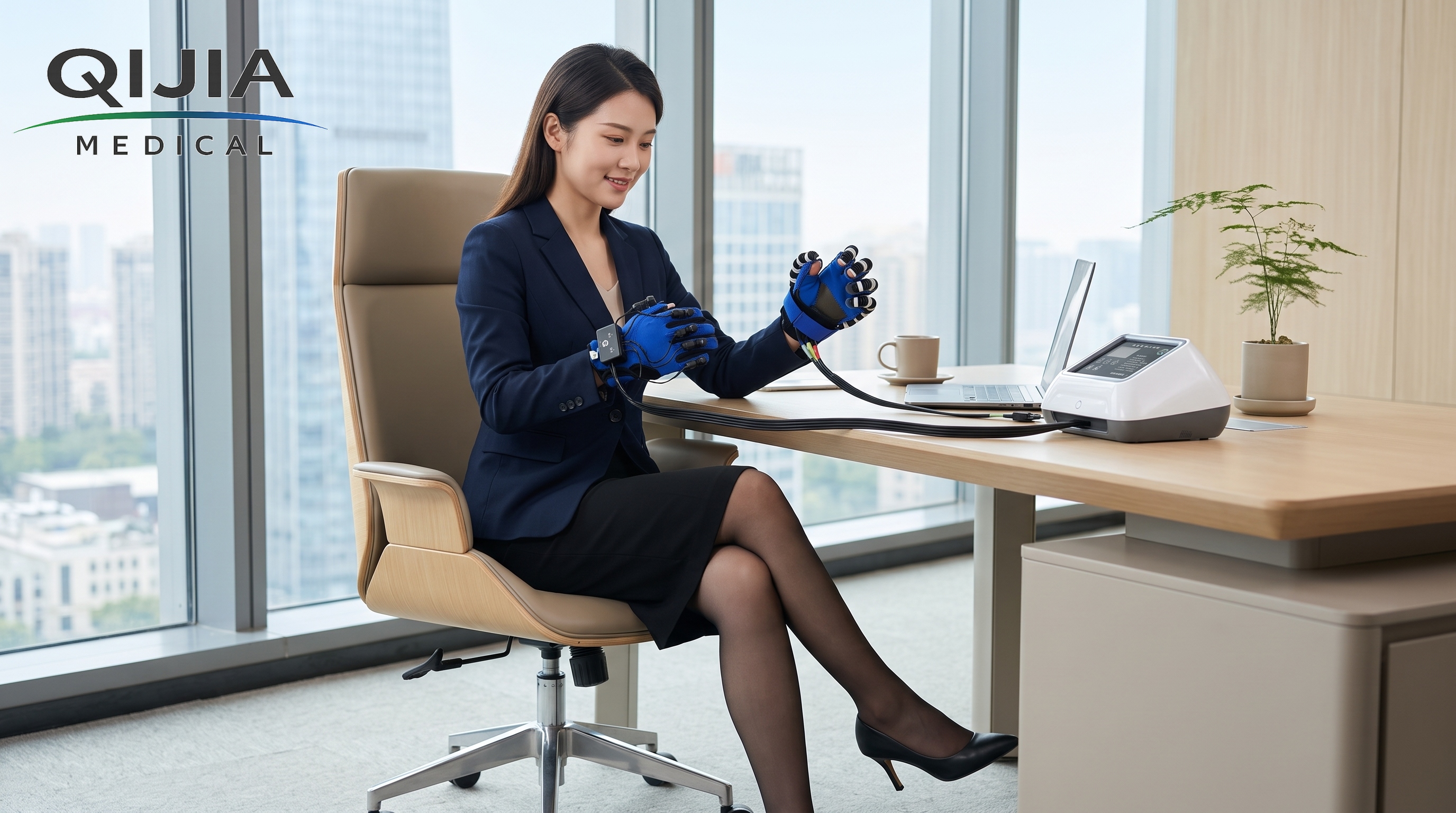
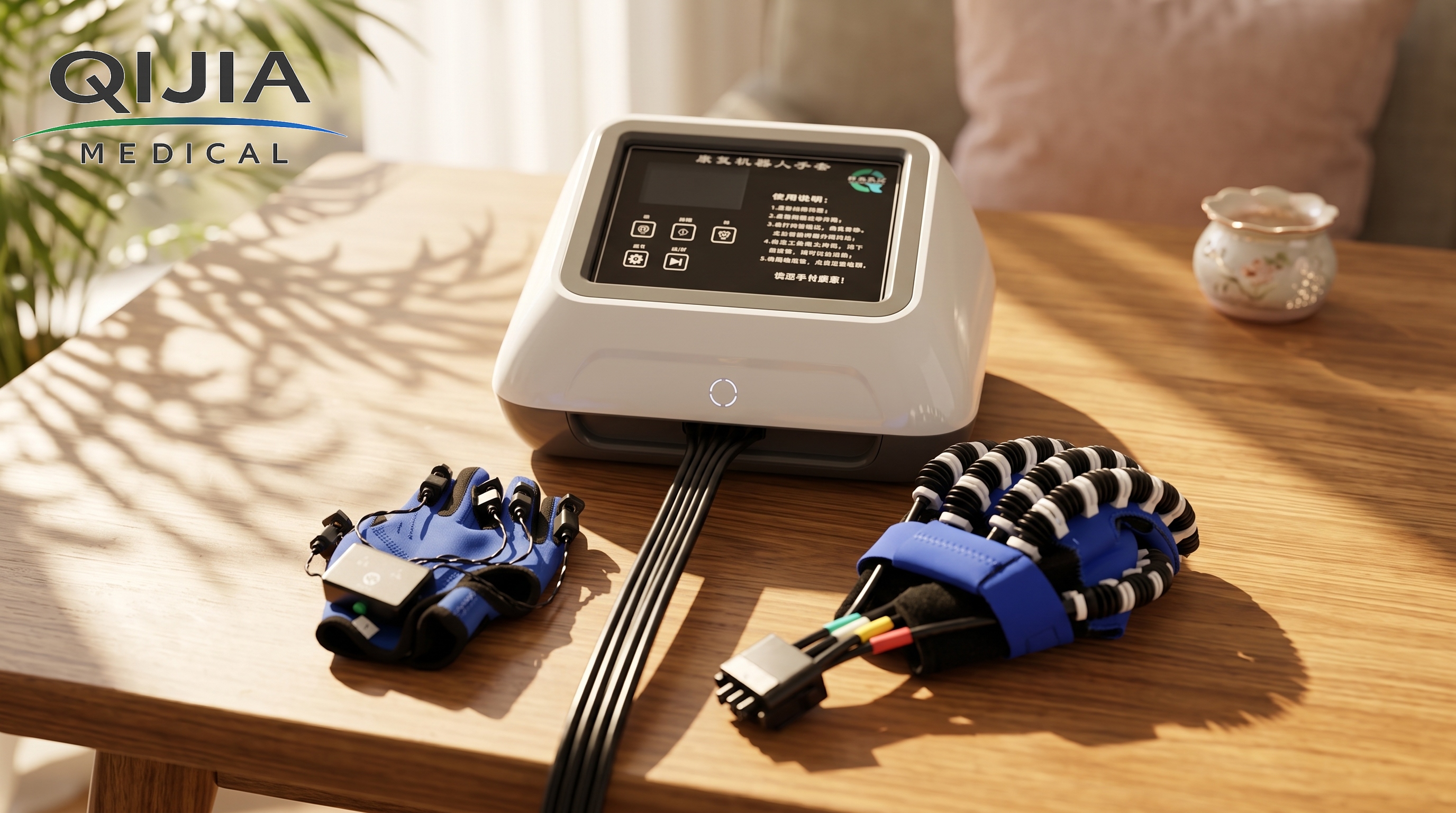
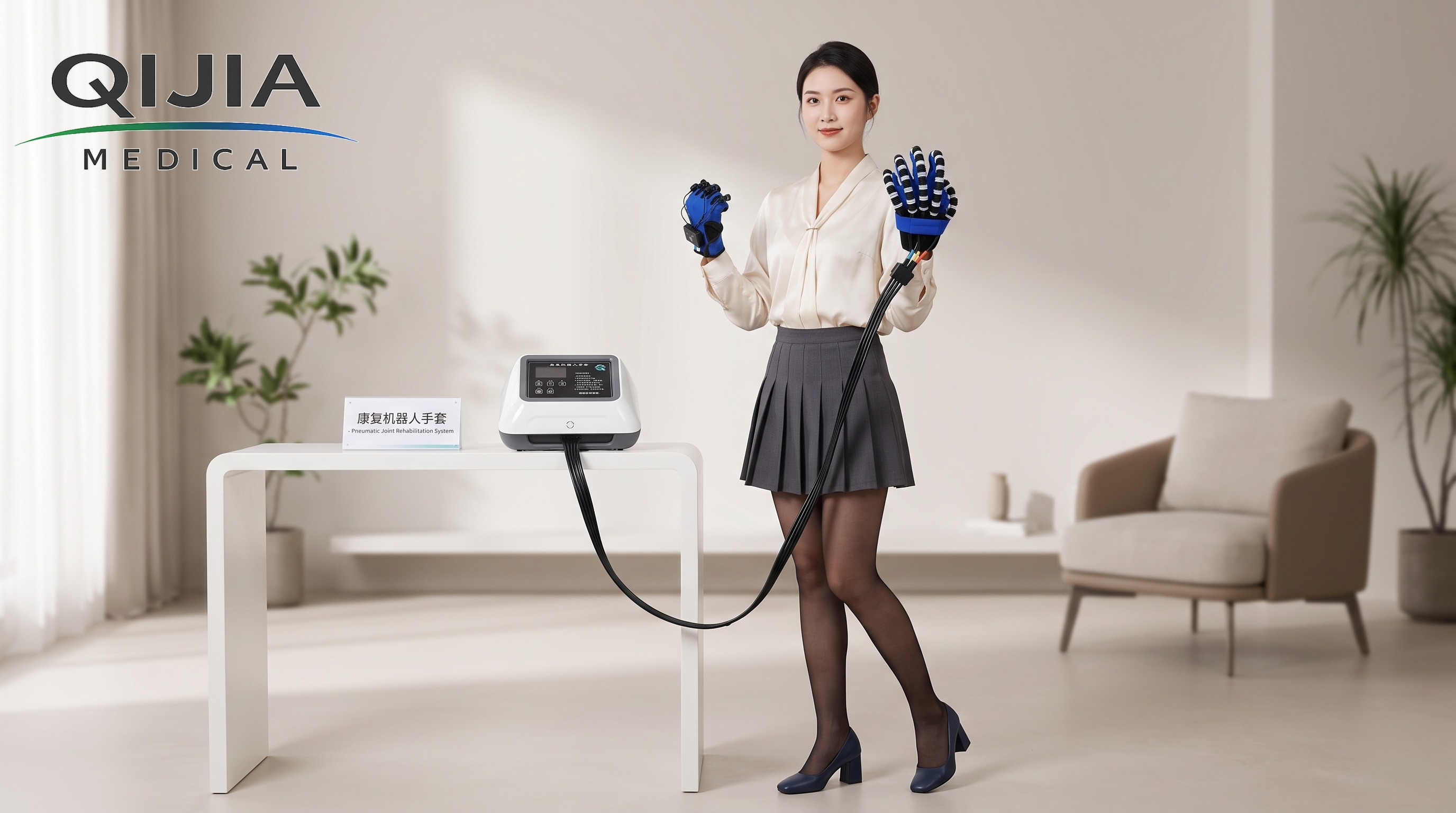
A pneumatic joint intelligent rehabilitation system is a rehabilitation device that uses controlled pneumatic movement to assist joint and limb training.
In hand rehabilitation applications, pneumatic technology can assist finger and hand movements during structured training sessions. Depending on the configuration, different systems may provide functions such as passive finger movement, grasping and extension exercises, individual finger control, or other hand rehabilitation modes.
These systems can be used as rehabilitation tools in professional healthcare environments such as hospitals, rehabilitation centers, and clinics.
The purpose of a rehabilitation device is not to replace professional assessment or therapy. Instead, it can provide an additional tool for structured and repetitive movement training within an appropriate rehabilitation program.
How Can Pneumatic Rehabilitation Support Post-Stroke Hand Training?
Pneumatic rehabilitation technology can provide controlled assistance during repetitive hand and finger exercises. This may be useful when a patient has difficulty completing certain movements independently.
Passive Finger Movement
Some stroke survivors may have limited voluntary movement in the affected hand. Depending on the patient's condition, passive or assisted movement can be incorporated into rehabilitation training.
A pneumatic rehabilitation system can assist the fingers through controlled movement according to the selected settings and the patient's rehabilitation requirements.
Repetitive Grasping and Finger Extension
Repeated grasping and hand-opening movements can provide structured opportunities for movement practice. Repetition allows patients to practice the same movement pattern under controlled conditions.
Training parameters should be selected according to the patient's ability and the rehabilitation professional's treatment plan.
Independent Finger Movement
Some pneumatic hand rehabilitation systems support independent control of individual fingers. This allows specific fingers to be trained separately rather than treating the hand only as one movement unit.
Individual finger control can be useful when rehabilitation goals involve targeted finger movement, coordination, and functional hand use.
Structured Rehabilitation Sessions
Consistent practice is an important part of rehabilitation. A rehabilitation device can help provide repeatable movement patterns during supervised training sessions.
However, device-assisted training should be integrated into an individualized rehabilitation program rather than being used as a replacement for professional therapy.
Learn more about the QIJIA Medical Pneumatic Joint Intelligent Rehabilitation System
Hand Rehabilitation Is About More Than Regaining Strength
It is common to think that stroke hand rehabilitation is mainly about rebuilding muscle strength. However, useful hand function depends on much more than strength alone.
Patients may need to work on movement control, coordination, range of motion, finger independence, grasp-and-release ability, and the practical use of the hand during daily activities.
For example, a patient may be able to close the hand but still have difficulty opening it again or releasing an object. Another patient may have sufficient strength but lack the coordination needed to move one finger independently.
This is why rehabilitation goals should be based on the patient's actual functional limitations and not simply on muscle strength.
Who Can Use a Pneumatic Hand Rehabilitation System?
Professional pneumatic hand rehabilitation systems may be incorporated into different healthcare environments depending on their intended use and the needs of the rehabilitation program.
Hospitals
Hospitals may use hand rehabilitation equipment as part of multidisciplinary rehabilitation programs for patients recovering from neurological conditions, including stroke.
Rehabilitation Centers
Rehabilitation centers can use structured hand and finger training technologies to support repetitive movement practice and ongoing rehabilitation sessions.
Rehabilitation Clinics
Clinics may integrate pneumatic hand rehabilitation equipment into individualized therapy programs based on patient assessment and treatment objectives.
Mirror Therapy and Bilateral Hand Rehabilitation
Some stroke rehabilitation programs use bilateral or mirror-based training approaches. These methods involve using movements of the less affected hand to support or guide movement practice involving the affected hand.
Mirror therapy and bilateral training may be considered for selected stroke survivors as part of upper-limb rehabilitation. The suitability of these approaches depends on the patient's condition, functional ability, and rehabilitation goals.
Some hand rehabilitation systems can incorporate mirror-based training concepts, allowing the movements of one hand to be used as a reference for movement training of the other hand.
The objective is to provide additional opportunities for structured movement practice while maintaining the patient's individual rehabilitation needs as the primary consideration.
What Should Patients and Caregivers Consider During Hand Rehabilitation?
Stroke rehabilitation should be individualized. The appropriate training method can depend on factors such as neurological impairment, voluntary movement, muscle tone, range of motion, cognition, sensory function, and the patient's functional goals.
Before using a rehabilitation device, patients should receive appropriate assessment and guidance from qualified healthcare professionals.
Important Considerations
Follow the rehabilitation plan provided by qualified healthcare professionals.
Choose appropriate training intensity and duration.
Monitor movement quality during exercises.
Avoid excessive force or uncomfortable movement.
Adjust training according to the patient's progress.
Reassess rehabilitation goals regularly.
Combine device-assisted training with appropriate functional rehabilitation activities.
The 2026 AHA/ASA stroke rehabilitation guideline emphasizes periodic reassessment and adjustment of rehabilitation strategies as a patient's needs change over time.
How to Choose a Hand Rehabilitation Device for a Hospital or Clinic
When hospitals, rehabilitation centers, clinics, and distributors evaluate a hand rehabilitation device, the decision should involve more than the appearance of the equipment.
Key Factors to Consider
Available rehabilitation modes
Individual finger movement control
Adjustable training parameters
Ease of operation
Patient comfort
Training duration settings
Available accessories and configurations
Technical support and after-sales service
Regulatory and certification requirements
Manufacturer experience and OEM/ODM capabilities
For healthcare providers, the most appropriate device should be selected according to the intended clinical application, patient population, rehabilitation workflow, and applicable regulatory requirements.
QIJIA Medical Pneumatic Joint Intelligent Rehabilitation System
QIJIA Medical develops rehabilitation equipment for professional healthcare applications, including pneumatic solutions for hand and joint rehabilitation.
The Pneumatic Joint Intelligent Rehabilitation System series is designed to provide controlled movement assistance for rehabilitation training. Different configurations can support different rehabilitation requirements, including passive finger joint movement, grasping and extension exercises, individual finger movement, and other hand rehabilitation functions.
The systems are designed for professional environments such as hospitals, rehabilitation centers, and clinics. Product configuration can be selected according to the intended application and market requirements.
Learn more about QIJIA Medical, our company, and OEM/ODM cooperation
Frequently Asked Questions About Hand Rehabilitation After Stroke
1. Why is hand rehabilitation important after a stroke?
Stroke can affect hand strength, coordination, range of motion, and voluntary movement. Hand rehabilitation provides structured opportunities to practice movements that may be important for daily activities and functional independence.
2. Can stroke patients regain hand movement?
Recovery varies significantly between individuals. Stroke severity, the area of the brain affected, overall health, rehabilitation participation, and individual response to training can all influence recovery.
3. Why is individual finger training useful?
Many everyday activities require precise finger control. Targeted finger exercises can therefore be included in rehabilitation programs when appropriate for the patient's condition and goals.
4. What is a pneumatic hand rehabilitation system?
A pneumatic rehabilitation system uses controlled air pressure to assist certain joint or limb movements. In hand rehabilitation, pneumatic technology can be used to assist repetitive finger and hand exercises.
5. Can a pneumatic hand rehabilitation device replace a therapist?
No. A rehabilitation device is a supportive tool and should be used as part of an appropriate rehabilitation program. Patient assessment, treatment planning, and progression should be guided by qualified healthcare professionals.
6. Can pneumatic hand rehabilitation equipment be used in hospitals?
Professional pneumatic hand rehabilitation systems can be used in appropriate hospital, rehabilitation center, and clinical environments according to the product's intended use and professional rehabilitation protocols.
7. Can individual fingers be trained separately?
Some hand rehabilitation systems provide independent finger control, allowing specific fingers to perform targeted movement training.
8. How should a hospital choose a hand rehabilitation system?
Hospitals and rehabilitation providers should consider rehabilitation modes, individual finger control, adjustability, patient comfort, intended clinical applications, regulatory requirements, technical support, and manufacturer experience.
Looking for a Professional Hand Rehabilitation Solution?
QIJIA Medical provides pneumatic rehabilitation systems for hospitals, clinics, rehabilitation centers, distributors, and healthcare equipment partners.
If you are interested in product specifications, model selection, OEM/ODM cooperation, or distribution opportunities, contact our team for more information.
Medical Information Disclaimer: This article is provided for general educational and informational purposes only. It does not replace professional medical diagnosis, rehabilitation assessment, or individualized treatment advice. Patients should consult qualified healthcare professionals before starting, changing, or progressing a rehabilitation program.