






Multi-Modal TMS Therapy (rTMS + FNS + NMES) in Post-Stroke and Neurological Rehabilitation: Clinical Mechanisms and Institutional Procurement Guide
Across neurology wards, stroke centers, and outpatient rehabilitation clinics, one of the most persistent clinical challenges is closing the gap between central neural recovery and peripheral limb function. Even when patients receive standard pharmacotherapy and conventional physical therapy, impaired interhemispheric balance, reduced regional cerebral blood flow, and disuse muscle weakness frequently slow functional recovery and lengthen inpatient stays. As a result, hospital rehabilitation teams and medical equipment distributors are increasingly evaluating non-invasive, multi-modal neuromodulation platforms—specifically systems that combine repetitive transcranial magnetic stimulation (rTMS), cerebellar fastigial nucleus stimulation (FNS), limb neuromuscular electrical stimulation (NMES), and variable-frequency vibration massage within a single compact console.
This clinical and procurement guide examines the physiological rationale behind multi-modal transcranial magnetic stimulation (TMS) systems, reviews peer-reviewed evidence on low-intensity magnetic stimulation and peripheral electrical neuromodulation, and outlines the key technical and regulatory criteria rehabilitation departments should verify before selecting a device.
1. The Clinical Challenge: Why Single-Modality Neurological Rehabilitation Often Plateaus
Following ischemic or hemorrhagic stroke, traumatic brain injury, or progressive neurodegenerative conditions such as Parkinson's disease, motor and cognitive deficits rarely stem from a single isolated pathway. Clinical research highlights three overlapping barriers that limit functional recovery when only conventional exercises or single-modality devices are used:
Disrupted Interhemispheric Inhibition: After unilateral stroke, reduced excitability in the affected (ipsilesional) motor cortex combined with compensatory hyperactivity in the unaffected (contralesional) hemisphere suppresses neural reorganization and slows upper- and lower-limb motor relearning.
Cerebral Microcirculation Deficits: Impaired regional cerebral blood flow (rCBF) and vascular reactivity around ischemic penumbra zones limit metabolic support for synaptic repair and cognitive recovery.
Peripheral Muscle Atrophy and Spasticity: Prolonged immobility leads to rapid disuse atrophy, reduced joint mobility, and abnormal muscle tone. Without peripheral sensory-motor feedback returning to the cortex, central neuroplasticity lacks the afferent reinforcement needed for durable functional gains.
Addressing only the central nervous system—or only the peripheral musculature—leaves half of the sensorimotor loop under-stimulated. Integrating top-down cortical modulation with bottom-up peripheral activation offers rehabilitation teams a more coherent clinical workflow.
2. How Multi-Modal TMS Works: Four Coordinated Non-Invasive Therapies
Modern tabletop brain-circulation and limb-function therapy platforms consolidate four complementary physical modalities so clinicians can tailor sessions across different stages of neurological and psychiatric care:
2.1 Repetitive Transcranial Magnetic Stimulation (rTMS)
In rTMS, pulsed magnetic fields generated by coils positioned around the cranium pass painlessly through the skull without direct scalp electrodes or surgical intervention. As summarized in the international evidence-based consensus guidelines by Lefaucheur et al. (Clinical Neurophysiology, 2020), rTMS modulates cortical excitability in a frequency-dependent manner—supporting bidirectional regulation across motor rehabilitation, neuropathic pain, post-stroke recovery, and depressive or sleep-related symptoms.
Importantly, mechanistic research published in Science Advances (Dufor et al., 2019) and the International Journal of Molecular Sciences (Dufor, Lohof & Sherrard, 2023) demonstrates that low-intensity repetitive transcranial magnetic stimulation (LI-rTMS) operating in the millitesla range can promote axon outgrowth, synaptogenesis, and neural circuit repair through cellular magnetoreceptor-mediated signaling—offering high patient comfort and suitability for both hospital wards and supervised home rehabilitation.
2.2 Cerebellar Fastigial Nucleus Stimulation (FNS / Mastoid Bioelectric Stimulation)
Through adhesive electrodes placed over the mastoid processes behind both ears, synthesized low-voltage pulse waveforms stimulate the cerebellar fastigial nucleus pathway. Clinically, FNS is used to help dilate cerebral microvessels, support regional cerebral blood flow, and stabilize neuronal electrophysiological balance—making it a widely adopted adjunct in cerebrovascular rehabilitation and post-stroke care.
2.3 Limb Neuromuscular Electrical Stimulation (NMES)
Working from the bottom up, NMES delivers controlled biomimetic low-frequency currents (modulated on a 4,000 Hz carrier frequency for patient comfort) through surface electrode pads placed on target paretic muscle groups. A 2024 systematic review and meta-analysis in the Journal of NeuroEngineering and Rehabilitation confirmed that NMES significantly supports post-stroke gait, balance, and limb functional parameters by triggering purposeful muscle contractions, maintaining muscle mass, reducing disuse atrophy, and feeding proprioceptive signals back to the central nervous system.
2.4 Variable-Frequency Vibration Massage
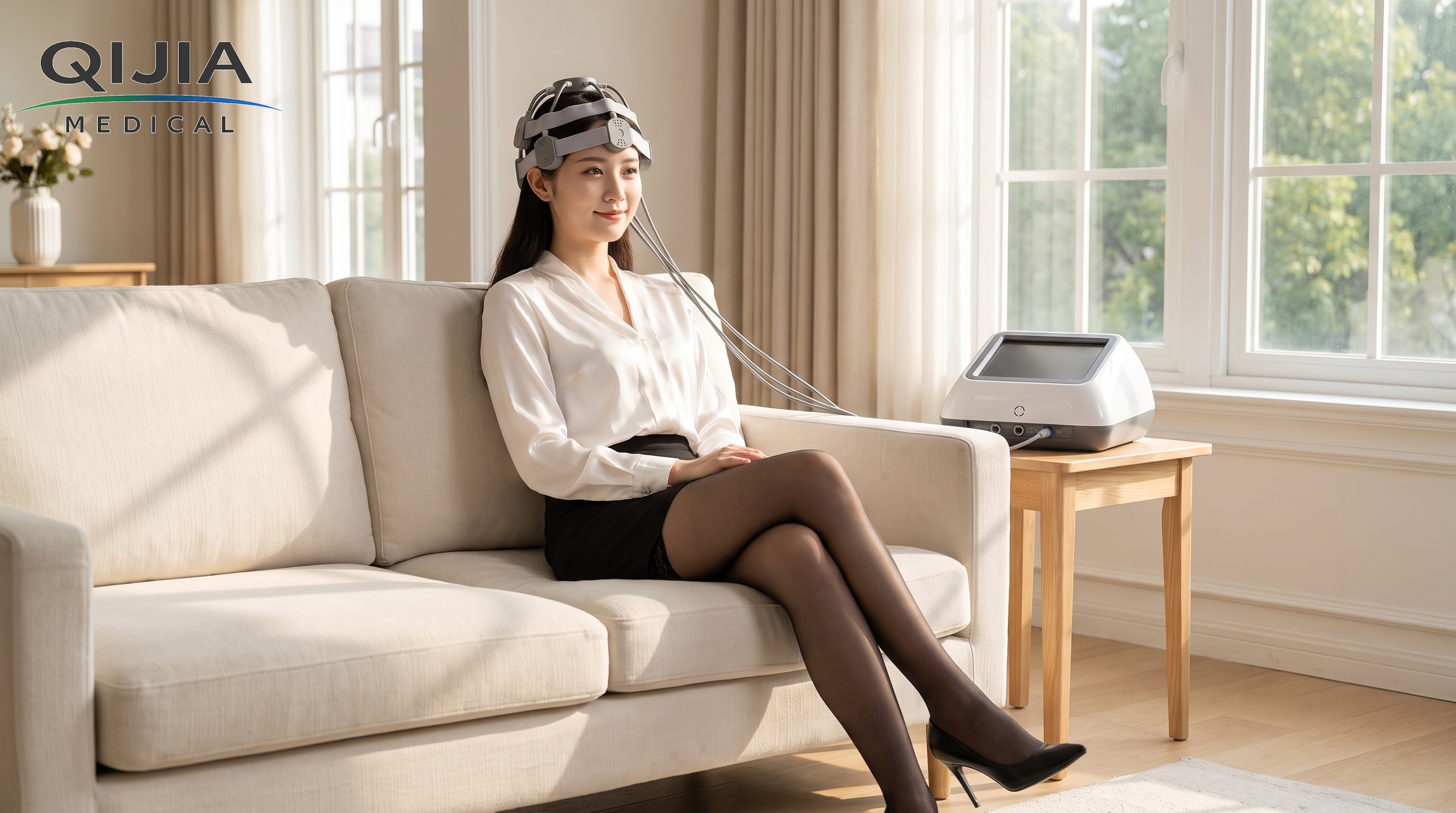
Built into the wearable magnetic cap, multi-frequency mechanical vibration (0 / 2 / 5 / 10 Hz across three intensity levels) provides gentle cranial massage during therapy. This helps ease patient tension, improve comfort and session adherence, and support adjunctive relaxation in patients experiencing fatigue, headache, or insomnia.
3. Clinical Application Scope Across Hospital Departments
Because a single multi-modal console combines cortical magnetic modulation, cerebral circulation support, and peripheral limb NMES, hospital procurement teams typically deploy it across multiple departments rather than a single specialty silo:
Neurology & Stroke Centers: Post-stroke hemiplegia and upper-limb motor recovery, cerebral infarction and hemorrhage convalescence, post-stroke aphasia, cerebral insufficiency, and cognitive impairment support.
Rehabilitation Medicine & Geriatrics: Parkinson's disease motor and non-motor support, peripheral nerve rehabilitation, neuropathic pain management, disuse muscle atrophy prevention after prolonged immobility or surgery, and age-related cognitive decline.
Psychiatry & Sleep Medicine: Adjunctive non-invasive physical therapy for depression, insomnia, anxiety-related tension, obsessive-compulsive disorder (OCD), and post-traumatic stress disorder (PTSD), under physician supervision.
Pediatric Rehabilitation & Supervised Home Care: Compact tabletop design allows clinics to transition stable patients from inpatient neurorehabilitation to structured home-based maintenance programs under clinician-prescribed parameters.
4. Technical Evaluation Criteria & Model Comparison (N-200T-QJ vs. N-400T-QJ)
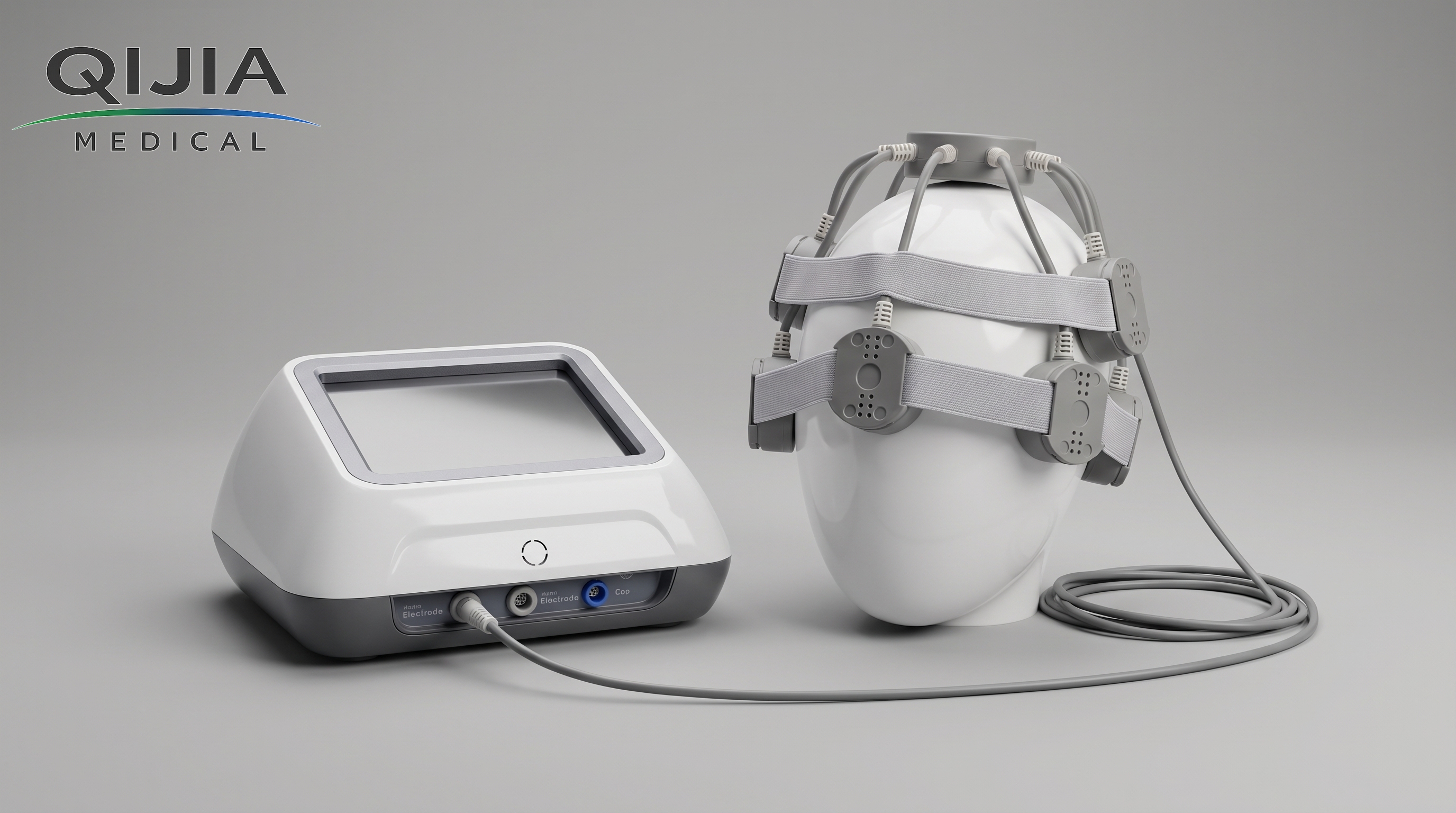
When hospitals, clinics, or regional distributors evaluate tabletop TMS systems, verifying exact hardware specifications, port architecture, and model differentiation prevents procurement mismatches. In the QIJIA MEDICAL TMS System lineup, the two flagship models share the exact same compact tabletop enclosure (available in white-grey and white-orange colorways) and 8-inch full-touch interface, while differing in therapeutic channel configuration:
| Parameter / Feature | N-200T-QJ (Standard TMS) | N-400T-QJ (4-in-1 Multi-Modal TMS) |
|---|---|---|
| Integrated Therapies | rTMS + TDCS + Variable-Frequency Vibration Massage | rTMS + FNS (Mastoid Electrodes) + Limb NMES + Vibration Massage |
| Display & Control | 8-inch HD full-touch LCD screen with one-touch treatment start | |
| Magnetic Therapy Heads | 9 upgraded magnetic applicators (frontal, parietal, temporal, occipital & cerebellar regions) | |
| Magnetic Field Intensity | 0–19 mT across 3 selectable levels: Low (3–8 mT), Mid (8–13 mT), High (13–19 mT) | |
| Vibration Massage | 3 intensity levels; 4 frequency settings (0 / 2 / 5 / 10 Hz) | |
| Head Electrode (FNS) | TDCS configuration | 0–80 intensity levels; 0–12.5 V; pulse width 200–600 μs; base freq. 11.9 / 15.87 / 23.8 Hz |
| Limb Electrode (NMES) | Not included | 10 biomimetic current modes; 0–90 levels; 0–36 mA; 4,000 Hz carrier; square & sine wave |
| Timer & Power Supply | 1–99 min adjustable; AC 110 V or 220 V (export-ready regional configurations) | |
| Console Size & Weight | 22 × 25 × 17 cm; Net weight 1.5 kg (Package: 33 × 33 × 29 cm, Gross weight 5.5 kg) | |
| Regulatory & QMS | NMPA Reg. No. 20242090159 · ISO 13485:2016 · ISO 9001:2015 · CE (ICR VoC HM240689) | |
5. Practical Clinical Protocol & Safety Considerations
To ensure safe, repeatable outcomes in daily clinical practice, rehabilitation departments should standardize patient screening and operator workflows before deploying any TMS or NMES device:
Pre-Treatment Contraindication Screening: Screen all candidates for intracranial metallic implants, cochlear implants, cardiac pacemakers or implanted defibrillators, active hemorrhagic stroke, severe uncontrolled epilepsy, or open scalp wounds at coil contact sites.
Gradual Parameter Titration: Initiate therapy at the low magnetic intensity tier (3–8 mT) and gentle vibration frequency (2 Hz) for first-time or elderly patients, adjusting gradually according to clinician assessment and patient tolerance.
Hygiene & Electrode Management: Use dedicated or disposable adhesive mastoid and limb electrode patches per patient, clean the wearable magnetic cap straps and coil housings between ward sessions, and inspect cable connectors regularly.
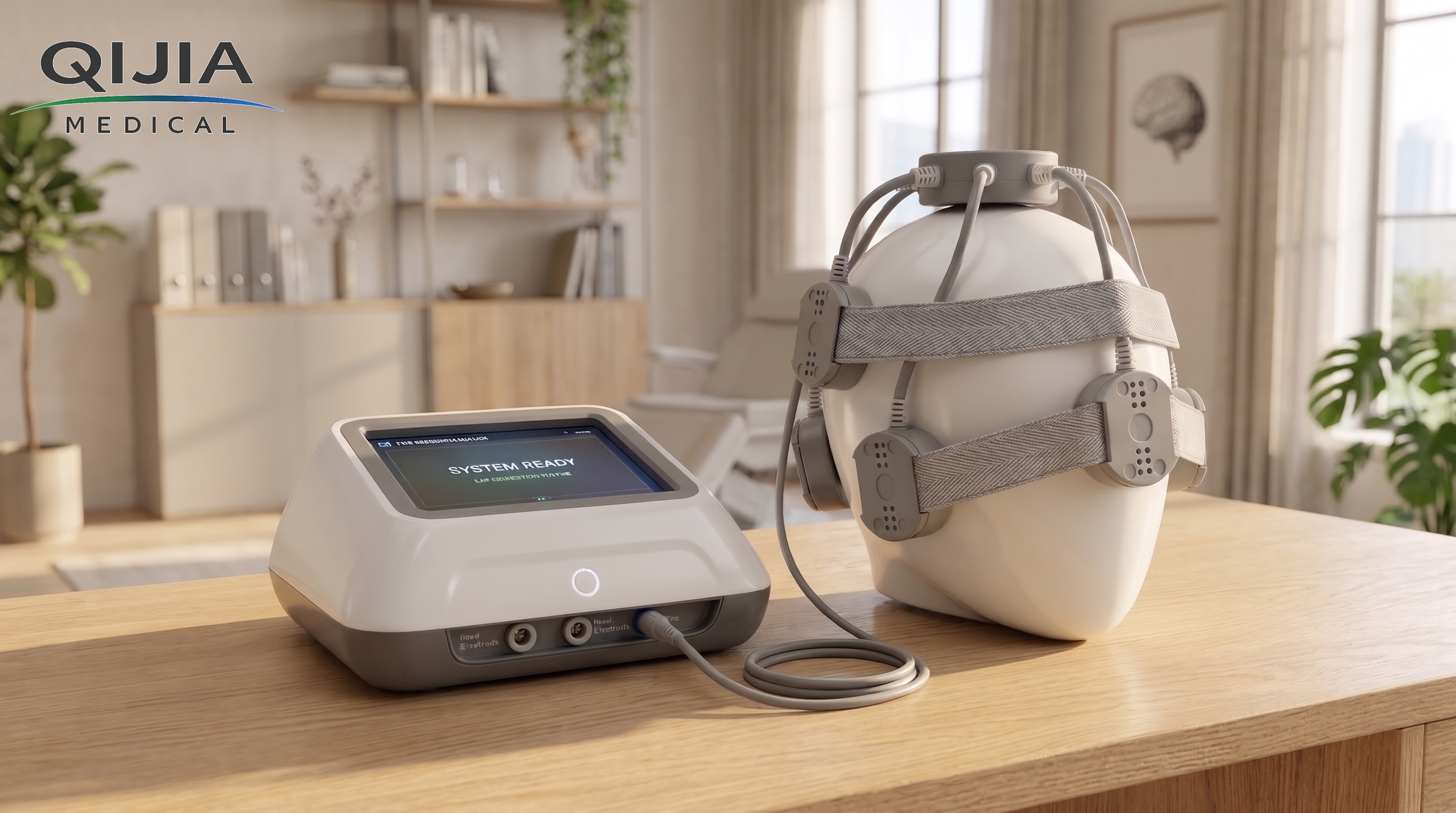
Dedicated Front-Port Organization: Clearly verify connections across the three labeled front ports—Head Electrode, Limb Electrode, and Magnetic Cap—before starting combined sessions.
6. Factory-Direct Supply, Quality Systems, and OEM/ODM Partnership
For medical equipment distributors, private rehabilitation clinics, and hospital procurement teams, long-term supply stability and engineering support matter as much as initial device performance. Jinan Qijia Medical Instrument Co., Ltd. (QIJIA MEDICAL) is an integrated R&D and manufacturing enterprise operating two production bases (Jinan, Shandong and Haikou, Hainan), with equipment installed across more than 3,000 hospitals and 20,000 home-care families.
Manufactured under certified ISO 13485:2016 and ISO 9001:2015 quality management systems—with China NMPA Class II registration (20242090159) and ICR CE Verification of Conformity (ICR/VC/HM240689)—QIJIA MEDICAL supports regional distributor partnerships as well as OEM/ODM customization (including local-language UI interfaces, 110 V / 220 V regional power configurations, and private-label branding). Procurement teams and distributors can contact QIJIA MEDICAL directly to request technical dossiers, clinical brochures, or quotation proposals tailored to their local market requirements.
Frequently Asked Questions (FAQ)
1. What is the difference between low-intensity tabletop TMS and high-intensity hospital figure-of-8 TMS?
High-intensity clinical TMS systems typically deliver 1–2 Tesla focal pulses via large liquid-cooled coils and require dedicated hospital treatment rooms. Low-intensity repetitive TMS (LI-rTMS, 3–19 mT) uses a lightweight wearable multi-coil magnetic cap that operates quietly without heat buildup, making it well suited for multi-region cortical modulation, ward-level rehabilitation, and clinician-guided home continuation.
2. How do the N-200T-QJ and N-400T-QJ models differ if they look the same?
Both models share the exact same 1.5 kg tabletop enclosure, 8-inch touchscreen, and 9-coil magnetic cap. The N-200T-QJ provides rTMS, TDCS, and vibration massage with the magnetic cap, whereas the N-400T-QJ adds cerebellar fastigial nucleus stimulation (FNS mastoid electrodes) and 10-mode limb NMES electrode channels for comprehensive brain-and-limb rehabilitation.
3. Can rTMS, FNS, and limb NMES be used during the same rehabilitation program?
Yes. Multi-modal systems like the N-400T-QJ feature three dedicated front ports (Head Electrode, Limb Electrode, and Magnetic Cap) designed so clinicians can combine central magnetic stimulation, cerebral circulation bioelectric stimulation, and peripheral limb muscle training within a coordinated rehabilitation plan.
4. Is TMS therapy painful or invasive?
No. Non-invasive magnetic pulses pass through the skull without skin puncture or anesthesia. Patients typically feel only gentle mechanical vibration from the cap (when vibration massage is enabled) or mild tingling and rhythmic muscle contraction when surface NMES electrodes are active.
5. What certifications should international buyers verify when importing QIJIA TMS devices?
QIJIA MEDICAL holds ISO 13485:2016 and ISO 9001:2015 quality management certifications, China NMPA registration (No. 20242090159), and an ICR Verification of Conformity (ICR/VC/HM240689). Because the ICR document is a voluntary Verification of Conformity rather than a full EU MDR Notified Body certificate, buyers should always confirm local country registration and market-access requirements with our regulatory team prior to import.
6. What power supply options are available for overseas clinics and distributors?
The tabletop TMS console supports AC 110 V or 220 V power configurations depending on destination market standards, and weighs only 1.5 kg (5.5 kg gross packaged weight), simplifying international air freight and clinic deployment.
7. Does QIJIA MEDICAL offer distributor pricing, clinical documentation, or OEM/ODM customization?
Yes. As a factory-direct manufacturer, QIJIA MEDICAL works directly with hospital procurement teams, rehabilitation clinics, and regional medical distributors worldwide, offering tiered distributor pricing, localized interface language customization, and OEM/ODM branding. You can reach out to our international sales team or review our manufacturing capabilities on our About Us page.
References and Further Reading
Lefaucheur JP, Aleman A, Baeken C, et al. Evidence-based guidelines on the therapeutic use of repetitive transcranial magnetic stimulation (rTMS): An update (2014–2018). Clinical Neurophysiology. 2020;131(2):474–528. PubMed (PMID: 31901448)
Dufor T, Grehl S, Tang AD, et al. Neural circuit repair by low-intensity magnetic stimulation requires cellular magnetoreceptors and specific stimulation patterns. Science Advances. 2019;5(10):eaav9847. PubMed (PMID: 31692960)
Dufor T, Lohof AM, Sherrard RM. Magnetic Stimulation as a Therapeutic Approach for Brain Modulation and Repair: Underlying Molecular and Cellular Mechanisms. International Journal of Molecular Sciences. 2023;24(22):16456. PubMed (PMID: 38003643)
Implications of neuromuscular electrical stimulation on gait ability, balance and kinematic parameters after stroke: a systematic review and meta-analysis. Journal of NeuroEngineering and Rehabilitation. 2024. PubMed (PMID: 39294678)
Medical Disclaimer
This article is intended for educational and medical-equipment procurement reference only and does not constitute medical advice, diagnosis, or treatment recommendations. Transcranial magnetic stimulation (TMS), fastigial nucleus stimulation (FNS), and neuromuscular electrical stimulation (NMES) devices are not guaranteed to cure any disease and must be prescribed and supervised by qualified healthcare professionals in accordance with local clinical guidelines and regulatory requirements.